
Snake (巳 Si): The Sixth Earthly Branch, Element & Interactions
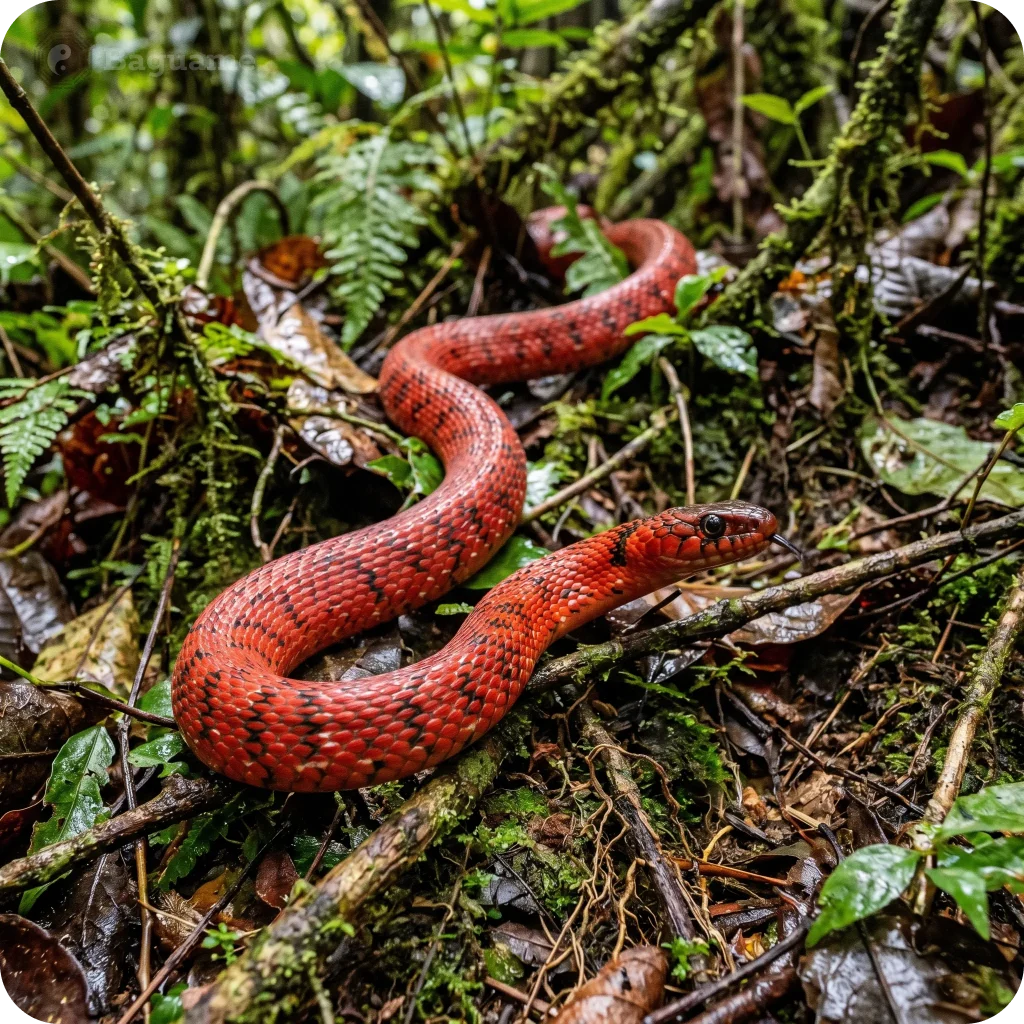
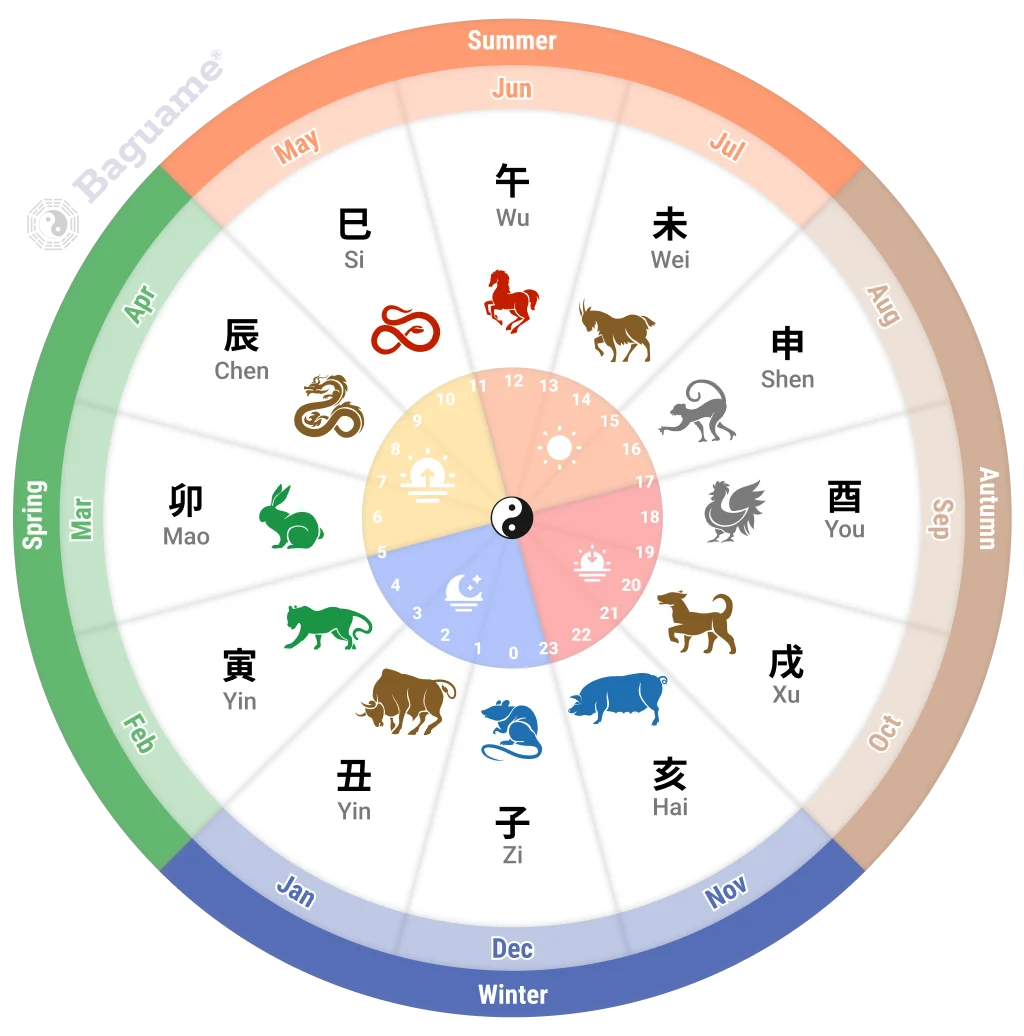
巳 Si is the sixth of the 12 Earthly Branches and the first branch of Summer. Where 辰 Chen (Dragon) stored Spring’s accumulated energy, Si releases it as Fire — the moment Yang Qi breaks through its final restraint and begins its ascent toward the Summer Solstice. Its element is Fire, its polarity is Yin, and its zodiac animal is the Snake.
In BaZi (Four Pillars of Destiny), Si is one of the four “Traveling Horse” branches — associated with movement, change, and major life transitions. It carries three hidden Heavenly Stems and is one of the most elementally diverse branches in the system, containing Fire, Metal, and Earth in a single package.
| Attribute | Value |
| Chinese Character | 巳 |
| Romanization | Si |
| Position in Cycle | 6th of 12 |
| Polarity | Yin |
| Element | Fire |
| Zodiac Animal | Snake |
| Season | Early Summer |
| Solar Month | 4th month (approx. May) |
| Hours | 09:00 – 11:00 |
| Direction | SSE (150°) |
| Principal Hidden Stem | 丙 Bing (Yang Fire) — 60% |
| Middle Hidden Stem | 戊 Wu (Yang Earth) — 20% |
| Residual Hidden Stem | 庚 Geng (Yang Metal) — 20% |
Hidden Stems: Three Layers Inside Si
Si contains three hidden Heavenly Stems, all Yang — like 寅 Yin (Tiger), Si has no Yin counterbalance within it. This creates a branch of concentrated, one-directional force. What makes Si unique is the combination of elements inside: Fire, Earth, and Metal — a generative chain where Fire produces Earth, and Earth produces Metal, all contained within a single branch.
丙 Bing — Yang Fire (60%)
The Principal Qi of Si. 丙 Bing is the Yang Fire of the Sun — radiant, expansive, and impossible to contain. It is the same hidden Fire that appears as Middle Qi inside Yin (Tiger), but here it takes the dominant position. Si is Bing Fire fully expressed: not the heat of a flame but the light of the Sun at mid-morning, climbing toward its zenith. In a chart, Si’s Bing Fire is a powerful resource for Fire Day Masters and brings visibility, charisma, and outward brightness.
戊 Wu — Yang Earth (20%)
The Middle Qi of Si. 戊 Wu — the Yang Earth of mountains — appears here as the product of Fire generating Earth. Its presence inside Si adds structural grounding beneath the solar brightness. In chart analysis, this hidden Earth can serve as a resource for Earth Day Masters and provides a stabilizing anchor for Si’s intense Fire energy — the mountain that does not burn even as the sun beats down on it.
庚 Geng — Yang Metal (20%)
The Residual Qi of Si. 庚 Geng is the Yang Metal of raw ore, axes, and forged blades — hard, decisive, and cutting. Its presence inside a Fire branch is counterintuitive at first glance: Fire controls Metal in the Five Element cycle. But the hidden Geng here represents the Metal being forged — refined and strengthened by the Fire, not destroyed by it. This is what allows Si to participate in the Metal Three Combination (Si–You–Chou) despite being a Fire branch.
Elemental Nature and Symbolic Meaning
Si marks the start of Summer — the moment Yang energy, which has been building since the Winter Solstice, finally takes full command. The days are long, the sun is high, and warmth pervades everything. This is not the explosive emergence of the Tiger or the sustained growth of the Rabbit — it is the confident, steady ascent of Fire in its element, moving toward its apex at the Summer Solstice in the following Wu (Horse) month.
In the cycle of the Five Elements, Fire at its Yin expression (Si is the Yin Fire branch despite containing Yang stems) is penetrating and pervasive rather than immediately overwhelming. The Snake — a creature of warmth, patience, and acute perception — embodies this precisely. The Snake does not rush. It moves with deliberate economy, reads its environment with extraordinary sensitivity, and strikes only when the moment is exactly right.
In classical Feng Shui, the SSE direction at 150° sits within the territory of the Xun Trigram (☴ Wind) in classical Feng Shui. On the 24 Mountains Luo Pan, the SSE zone contains: 巽 Xun, 巳 Si, and 丙 Bing — with Si occupying the central 15° of SSE (142.5°–157.5°).
Branch Interactions
Si is one of the most interaction-dense branches in the system — it appears in two major Three Combinations (Fire and Metal), one Seasonal Frame, clashes with its direct opposite, and participates in both a three-branch Punishment and a Harm. In BaZi analysis, Si’s hidden Metal stem is what enables its surprising participation in the Metal combination despite being a Fire branch.
Six Combination (六合): Si + Shen → Water
巳 Si combines with 申 Shen (Monkey) to produce Water energy. This is one of the more surprising Six Combinations — a Fire branch and a Metal branch combining to produce Water. The classical explanation is that Metal (Shen) generates Water, and the interaction with Si’s hidden Metal (Geng) creates a bridge that enables this transformation. In a chart, Si–Shen combination neutralizes both Fire and Metal, converting them into Water — which can dramatically shift the elemental balance.
Three Combination (三合): Yin + Wu + Xu → Fire Frame
寅 Yin (Tiger), 午 Wu (Horse), and 戌 Xu (Dog) form the Fire Three Combination — but wait: Si is not in this combination. Si belongs to the Metal Three Combination instead (see below). This is one of the most common misconceptions about Si in BaZi — it is a Fire branch, but it combines for Metal, not Fire.
Three Combination (三合): Si + You + Chou → Metal Frame
巳 Si, 酉 You (Rooster), and 丑 Chou (Ox) form the Metal Three Combination (三合金局). Si acts as the opening node, anchored by its hidden 庚 Geng Metal. When all three branches appear in a chart, Metal energy is powerfully amplified. This is why Si’s hidden Geng Metal is often considered more practically significant than its principal Bing Fire in combination analysis.
Seasonal Combination (三會): Si + Wu + Wei → Fire Season
巳 Si, 午 Wu (Horse), and 未 Wei (Goat) form the Seasonal Fire Frame — the three branches of Summer. Here Si acts through its principal stem 丙 Bing Fire. The Seasonal Frame is considered the strongest Fire combination in the system when all three branches are present together, producing intense and difficult-to-moderate Fire energy.
Six Clash (六沖): Si ↔ Hai
巳 Si clashes directly with 亥 Hai (Pig) — a Fire–Water opposition along the SSE–NNW axis. Both are Traveling Horse branches, which makes this clash particularly activating and associated with sudden movement and change. Water controls Fire in the Five Element cycle, so the clash is structurally weighted against Si when Hai is stronger. In time-based forecasting, a Si–Hai clash often triggers significant travel, career pivots, or abrupt changes in direction.
Punishment (刑): Yin → Si → Shen — Ungoverned Punishment
巳 Si participates in the three-branch Ungoverned Punishment (無制之刑) together with 寅 Yin (Tiger) and 申 Shen (Monkey). The cycle runs: Yin punishes Si, Si punishes Shen, Shen punishes Yin — a triangle of unresolved force with no exit. It generates patterns of self-defeating escalation, repeated mistakes, and situations that grow beyond the original intent before any correction is possible.
Harm (害): Si ↔ Yin
巳 Si and 寅 Yin (Tiger) form a Harm relationship (六害). Despite Wood normally generating Fire — a relationship that should be supportive — in this Harm configuration the dynamic turns draining. Energy flows without productive return, and situations that appear cooperative on the surface gradually erode both parties. Si and Yin also appear together in the Ungoverned Punishment, compounding the complexity when both interactions are active.
Destruction (破): Si ↔ Shen
巳 Si and 申 Shen (Monkey) form a Destruction relationship (破). This is notable because Si and Shen also form a Six Combination (producing Water) and appear together in the Ungoverned Punishment. Three simultaneous interactions between the same two branches is unusual in the system, making the Si–Shen relationship one of the most complex pairs to analyze: depending on the chart context, they may combine, punish, or destroy each other.
Si in the BaZi Chart: Four Pillar Positions
The meaning of Si shifts depending on which pillar it occupies in a BaZi chart. Use the Baguame BaZi calculator to identify where Si appears across your Year, Month, Day, and Hour pillars.
Year Pillar
Relates to ancestry and early life. Si in the Year Branch suggests a background marked by intensity, transformation, and hidden complexity. The family or social environment may have been characterized by strong personalities, strategic thinking, or significant pivots and reinventions.
Month Pillar
Reflects career context. Si in the Month Branch places Fire’s radiating energy and Metal’s precision in the professional sphere. Natural domains: strategy, intelligence work, finance, law, technology, and any field requiring both analytical depth and the ability to project authority and vision.
Day Pillar
Describes the self and closest relationships. Si as a Day Branch indicates a person with 丙 Bing Fire as their core energy — perceptive, magnetic, and capable of seeing what others miss. They tend to be private about their real intentions, revealing only what is necessary and maintaining strategic control of information in relationships.
Hour Pillar
Governs later life and private desires. Si in the Hour Branch places the Snake’s perceptive, strategic energy in the realm of inner aspiration — a person whose private goals are carefully constructed and whose later life involves a deliberate and patient unfolding of long-held plans.
Si as a Time Marker: Month, Hour, and Direction
Si Month
Si governs the 4th lunar month — beginning with 立夏 Li Xia (Start of Summer, approximately May 6). This is the official start of Summer in the Chinese metaphysical calendar. Yang energy is now dominant and ascending. Si month energy is active, perceptive, and forward-moving — a time when strategies crystallize into action and the warmth of the season accelerates both growth and transformation.
Si Hour
Si governs 09:00–11:00 — mid-morning, when the sun is well above the horizon and the day’s activity is in full flow. In classical Chinese timekeeping, this was considered a time of clear-headed productivity: the mental fog of early morning has lifted, and the heat of midday has not yet arrived. Births during this window are recorded as the Si Hour in a BaZi chart.
Si Direction: SSE
Si corresponds to SSE at 150° on the compass, within the territory of the Xun Trigram (☴ Wind) in classical Feng Shui. On the 24 Mountains Luo Pan, Si occupies the central 15° of SSE (142.5°–157.5°), flanked by 巽 Xun and 丙 Bing. In Flying Stars natal chart analysis, the SSE sector carries the energy of early Summer Fire — relevant for assessing visibility, recognition, and outward expression in a property.
Snake Years in the 60-Year Cycle: Wood, Fire, Earth, Metal, Water Snake
In the BaZi calendar, every Snake year pairs 巳 Si with a different Heavenly Stem. Because Si is a Yin Branch, it always pairs with Yin Stems — completing its full cycle of 5 variations every 60 years.
| Stem + Branch | Name | Stem Element | Recent Years |
| 乙巳 | Wood Snake | 乙 Yi — Yin Wood | 1905, 1965, 2025 |
| 丁巳 | Fire Snake | 丁 Ding — Yin Fire | 1917, 1977, 2037 |
| 己巳 | Earth Snake | 己 Ji — Yin Earth | 1929, 1989, 2049 |
| 辛巳 | Metal Snake | 辛 Xin — Yin Metal | 1941, 2001, 2061 |
| 癸巳 | Water Snake | 癸 Gui — Yin Water | 1953, 2013, 2073 |
| Note: Si always pairs with Yin Stems only (乙, 丁, 己, 辛, 癸) — Yin Branch pairs with Yin Stem. There is no Yang Stem Snake year. | |||
Snake Symbolism and Character in Chinese Culture
The Snake occupies a fascinating and ambivalent position in Chinese culture — neither universally feared nor universally revered, but consistently associated with wisdom, transformation, and hidden power. Unlike the Dragon’s open magnificence or the Tiger’s visible force, the Snake’s power is interior and concealed. It knows things others do not. It sees what others miss. And when it acts, the action is precise, complete, and final.
In Chinese tradition, the Snake is associated with beauty, intelligence, and longevity. The shedding of its skin made it a natural symbol of transformation and renewal — the ability to release what is no longer needed and emerge changed. The connection to Fire deepens this: Fire transforms, illuminates, and consumes what is old to make way for what is new.
Core Snake Traits in BaZi
Si’s three hidden Yang stems — Bing Fire, Wu Earth, Geng Metal — produce a distinctive character profile when Si appears prominently in a chart:
- Acute perception — notices what others overlook; rarely misses a signal
- Strategic privacy — reveals intentions selectively; maintains information advantage
- Patience before action — waits for the exactly right moment, then strikes with precision
- Magnetic presence — the hidden Bing Fire creates natural radiance and attraction
- Capacity for transformation — reinvents when necessary, sheds what no longer serves
- Traveling Horse restlessness — beneath the composed surface, a persistent drive toward movement and change
What the Snake Symbolizes
- Hidden wisdom — sees what is concealed; knows before others know
- Transformation and renewal — shedding the old skin; emergence changed
- Early Summer Fire — Yang ascending, warmth pervasive, the season fully underway
- The Traveling Horse — associated with movement, relocation, and pivotal life changes
- Internal generative chain — Fire → Earth → Metal within a single branch; the alchemist’s branch
- Precision over force — acts once, correctly, rather than repeatedly and approximately
Frequently Asked Questions
Si is Yin Fire. Its principal hidden stem is 丙 Bing (Yang Fire) at approximately 60%, with 戊 Wu (Yang Earth) and 庚 Geng (Yang Metal) each contributing around 20%. All three hidden stems are Yang, making Si one of four all-Yang branches alongside Yin (Tiger), Shen (Monkey), and Hai (Pig).
Because Si contains 庚 Geng (Yang Metal) as a residual hidden stem. In the Metal Three Combination (Si–You–Chou), it is this hidden Geng that enables Si to anchor the opening node of the combination. The Three Combination operates through hidden stems, not the branch’s surface element — which is why Si, a Fire branch, combines for Metal. This is one of the most common sources of confusion for students of BaZi and a key reason why understanding hidden stems is essential to accurate chart reading.
Si clashes with 亥 Hai (Pig). This is a Fire–Water clash along the SSE–NNW axis — both are Traveling Horse branches, making the clash particularly activating and associated with sudden movement and major transitions. Water controls Fire in the Five Element cycle, so the clash tends to be weighted against Si when Hai is the stronger branch in the chart context.
Both — and a Destruction as well. Si and 申 Shen (Monkey) have three simultaneous interactions: they form a Six Combination (producing Water), participate together in the Ungoverned Punishment (Yin–Si–Shen), and form a Destruction relationship (破). This makes Si–Shen one of the most complex pairs in the system. Classical practitioners assess which interaction dominates based on the complete chart context — the other branches present, the Heavenly Stems above each branch, and the overall elemental balance.
2025 is the year of 乙巳 — the Wood Snake. The Year Branch is 巳 Si, and the Year Stem is 乙 Yi (Yin Wood). In BaZi terms, Yi Wood sitting above Si Fire creates a generative relationship — Wood feeds Fire, so the Stem supports the Branch beneath it. This produces a year where creative and growth-oriented energy (Yi Wood) actively fuels visibility and transformation (Si Fire). Note that in BaZi, the year officially begins at 立春 Li Chun (Start of Spring, around February 4) — not at Chinese New Year. To see how 2025 interacts with your personal chart, use the Baguame BaZi calculator.