
Yin Earth (己 Ji) — The Sixth Heavenly Stem
Yin Earth, written 己 and pronounced Ji, is the sixth of the Ten Heavenly Stems and the second of the two Earth stems. In contrast to Yang Earth (戊 Wu), which is the great mountain — vast, immovable, and defined by structural solidity — Yin Earth is the fertile farmland: soft, warm, receptive, and quietly extraordinary in its capacity to receive anything and transform it into nourishment. Where the mountain endures, the soil sustains.
Core Identity
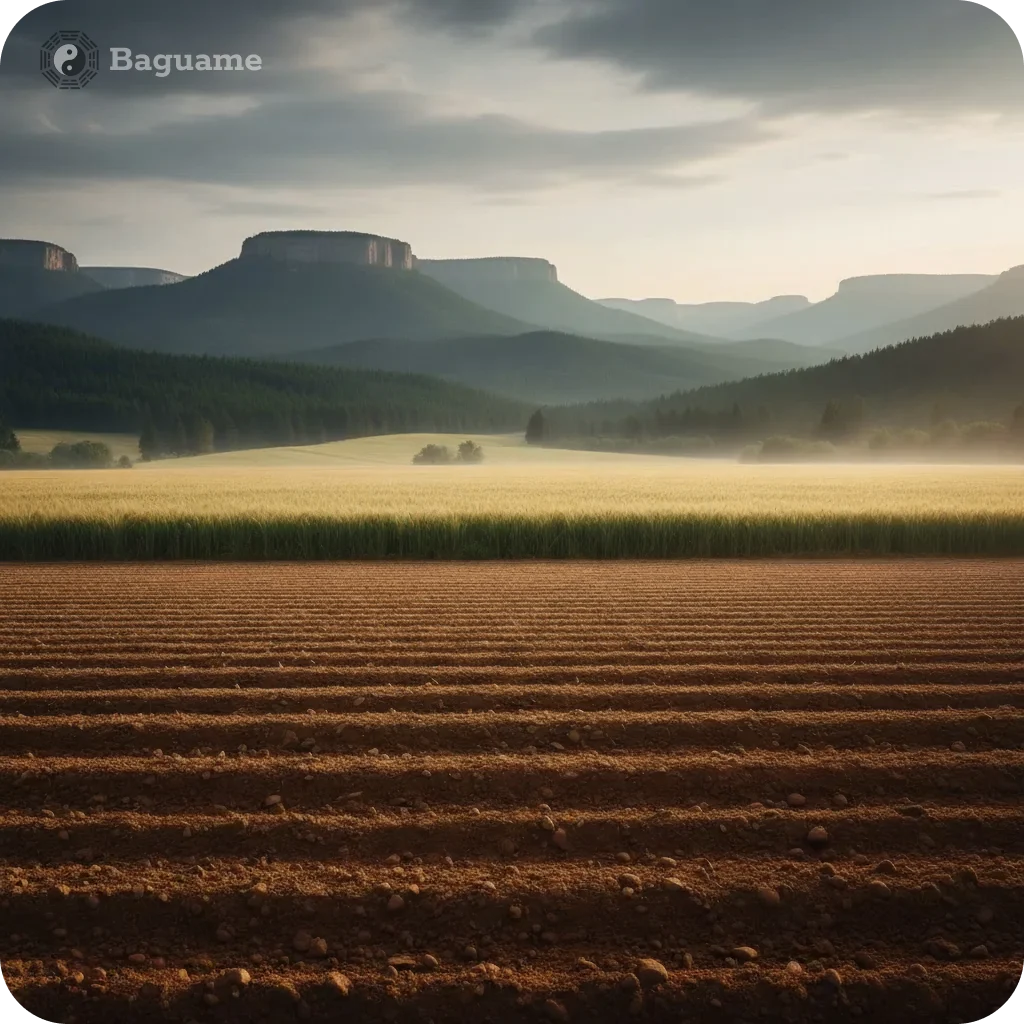
Ji is Yin energy within the Earth element — receptive, nurturing, and deeply skilled at containing and transforming whatever is placed within it. In contrast to Wu, which derives its power from unmovable presence, Ji derives its power from absorption and transformation. Furthermore, where Wu says “I will not move,” Ji says “bring everything to me — I will make it useful.”
In classical texts, Ji is associated with quiet intelligence, practical wisdom, and an extraordinary capacity to hold complexity without being overwhelmed by it. Ji people are rarely the most visible in a room, yet they are often the most indispensable. In practice, this makes them remarkable counselors, cultivators, administrators, and healers — people whose work consists of taking what is raw, broken, or scattered and returning it in a form that can grow.
Key Attributes at a Glance
Element
Earth (Yin)
Natural Image
Fertile Farmland · Garden Soil · Marsh
Season / Direction
Transitional · Center
Polarity
Yin (even)
The Five Element Relationships
Understanding Ji requires mapping it against all five elements. The interactions below form the foundation of BaZi analysis when Yin Earth appears in any pillar.
Fire Produces Earth (生)
Producing element. Fire (丙 Bing, 丁 Ding) generates Ji and acts as its resource. For Yin Earth, Ding Yin Fire is the most natural pairing — a gentle, consistent warmth that heats the soil without scorching it, encouraging growth from below. In contrast, excessive Bing Yang Fire can dry and harden fertile earth, turning nourishing soil into cracked clay. As a result, Ji people benefit most from warm, focused support rather than blazing, overwhelming recognition.
Earth Produces Metal (生)
Output element. Metal (庚 Geng, 辛 Xin) is produced by Earth and represents Ji’s output and creative legacy. Furthermore, Xin Yin Metal is the ideal output for Ji — a small jewel or fine mineral drawn from fertile soil, refined and precious. In practice, Ji people who express their output tend to produce things of lasting quality and quiet beauty: not monuments, but the kind of refined work that improves every life it touches.
Earth — Same Element (比)
Parallel / Companion. Other Earth stems (Ji or Wu) share the pillar. Fertile soil beside fertile soil — companion Ji deepens the chart’s capacity for absorption and nurturing. That said, too much Earth creates a muddy, stagnant environment where nothing can gain traction. Furthermore, Ji alongside Wu is a classically important pairing: fertile farmland at the foot of the great mountain, the softness that receives what the height cannot hold. Balance requires Wood or Water to keep things moving.
Wood Controls Earth (克)
Controlling element. Wood (甲 Jia, 乙 Yi) restrains Ji. In BaZi, Wood is the Officer or Power star for Ji. However, for Yin Earth, Yi Yin Wood is the most appropriate controller — the vine threading through fertile soil, drawing nourishment without uprooting it. In contrast, Jia Yang Wood driving its roots into soft farmland can be too forceful, exhausting the soil rather than working with it. As a result, Ji Day Masters tend to respond best to gentle, intelligent authority rather than commanding, top-down direction.
Earth Controls Water (克)
Dominated element. Water (壬 Ren, 癸 Gui) is dominated by Earth. In BaZi, Water represents Wealth for Ji. Specifically, Gui Yin Water is the most natural Wealth target — gentle rain absorbed by fertile soil, the most perfect of all nourishing exchanges. However, for Yin Earth, too much Water turns the field into a marsh: nourishment becomes drowning, and the soil loses its ability to hold anything upright. As a result, Ji people must be careful not to take on more than their capacity to process and transform.
The Soil and the Rain
The most natural and celebrated pairing for Ji: 己 Ji (Yin Earth, Fertile Soil) receiving 癸 Gui (Yin Water, Rain). Soft earth drinking gentle rain is the most elemental image of nourishment in the Five Element system — two Yin energies in perfect correspondence. Consequently, this pairing appears frequently in the charts of healers, educators, counselors, and caregivers: people whose primary gift is their capacity to receive what is broken or scattered and return it transformed, nourished, and ready to grow again.
Personality Traits
Fertile soil does not announce itself. It simply receives, transforms, and returns — season after season, without recognition, without complaint, and without end. Ji energy operates in exactly this way: through quiet, sustained, deeply practical care that only becomes visible when it is absent. Below are the core traits observed in individuals with Ji as the Day Master or prominent in the chart.
Strengths
- Nurturing capacity. Ji people sustain those around them with a consistency and depth that is rare among the Ten Stems. In particular, they create environments — in families, teams, and relationships — where others feel genuinely nourished and supported without having to ask.
- Practical wisdom. Fertile soil knows what each seed needs. Consequently, Ji people carry a deep, experience-based intelligence about what actually works — not theory, but the kind of wisdom that only comes from years of patient, attentive engagement with real conditions.
- Absorptive resilience. Soil absorbs rain, drought, and frost and continues producing. As a result, Ji people recover from difficulty through a quiet, internal process of transformation rather than dramatic reaction — they metabolize what happens to them and emerge more fertile, not more damaged.
- Reliability in care. Moreover, Ji people show up consistently for those they are responsible for. Their support is not dramatic or conditional — it is the steady, unspectacular presence that is, in the end, the most valuable kind.
- Capacity for complexity. Above all, fertile soil can hold many different seeds simultaneously without confusion. Ji people are capable of managing and nurturing multiple relationships, responsibilities, and projects at once — holding the complexity without losing their groundedness.
Challenges
- Over-absorption. Soil that absorbs too much becomes a marsh. In many cases, Ji people take on the problems, emotions, and burdens of others until their own capacity to function is compromised — unable to say no to the needs that keep arriving.
- Invisible contribution. Fertile soil is not seen — only what grows from it is. However, this invisibility means Ji people frequently do not receive recognition proportional to their actual contribution, which over time can create quiet, accumulated resentment.
- Difficulty with boundaries. The field does not choose what is planted in it. Consequently, Ji people can struggle to establish and maintain clear limits — allowing others to plant demands, expectations, or burdens without Ji having consciously agreed to carry them.
- Inertia. Rich soil is heavy. For this reason, Ji people can be slow to initiate change, move toward new opportunities, or act decisively when circumstances require speed rather than careful, patient cultivation.
- Over-caution. Furthermore, Ji’s preference for stability and tested approaches can make it risk-averse to the point of missing genuine opportunities — defaulting to the familiar field rather than exploring new terrain that might yield a richer harvest.
Ji in the Four Pillars
The position of 己 in the BaZi chart changes its expression significantly. The same stem operates differently depending on whether it appears in the Year, Month, Day, or Hour pillar.
| Pillar | Domain | Expression of Yin Earth |
| Year (年) | Ancestors, social environment, early life | Nurturing or agriculturally rooted family background; early environment characterized by quiet care, practical wisdom, and the expectation of reliable contribution over dramatic achievement |
| Month (月) | Career, parents, prime years (20–40) | Career built on care, administration, and the cultivation of people or systems; works best in roles where quiet reliability and practical intelligence are the core contribution |
| Day (日) | Self, spouse palace | Day Master — defines core character as described above. Spouse palace suggests a partner who brings energy, movement, or Wood direction — someone who plants seeds in the fertile ground Ji provides |
| Hour (时) | Children, later life, hidden thoughts | Practically skilled or deeply caring children; late-life fulfillment through the legacy of what has been nourished and cultivated; inner world oriented around responsibility, care, and the quiet satisfaction of having made things grow |
Ji as Day Master — the Soil Identity
When 己 is the Day Master, the entire chart is read through the lens of fertile earth. The key questions are: is this soil warm and well-cultivated, or cold and waterlogged? Is it being asked to produce more than it can sustain? You can calculate your own chart using the Baguame BaZi calculator.
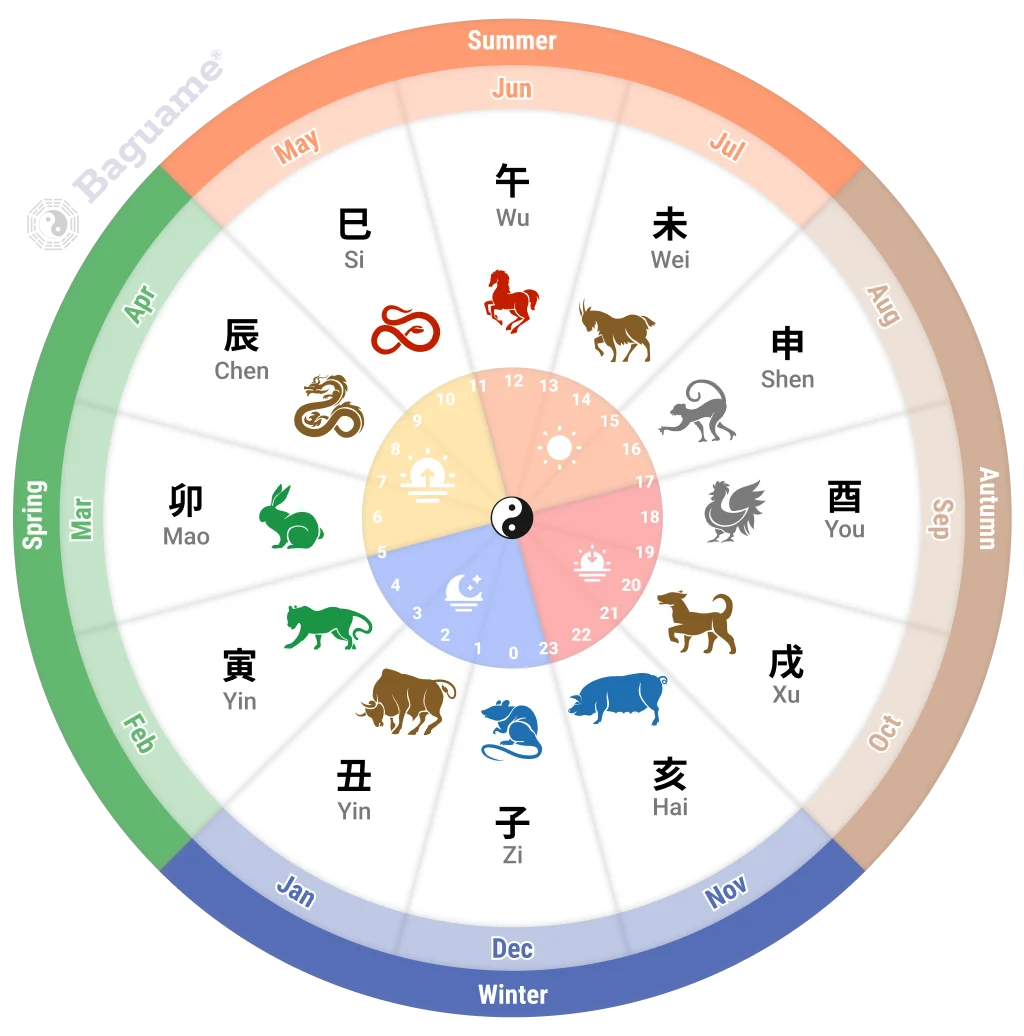
The central question for a Ji Day Master is: is this soil warm, well-drained, and purposefully cultivated — or is it cold, flooded, or exhausted by overuse? Season sets the starting conditions.
Summer (巳 Si · 午 Wu · 未 Wei)
Fire resource season — the soil is warm and producing. Consequently, summer Ji is at its most fertile and outwardly productive, the earth at its peak capacity to support growth. However, excessive Fire without Water can dry and crack even the richest soil. Therefore, Gui Yin Water as Wealth is especially important in summer Ji charts to maintain the right moisture balance.
Winter (亥 Hai · 子 Zi · 丑 Chou)
Water season — Ji’s Wealth is active, but the risk of flooding is real. As a result, winter Ji charts require careful management: the soil is absorbing a great deal of Water, and without Fire warmth to drive evaporation and keep the field productive, the marsh becomes the dominant image. That said, a well-balanced winter Ji — with Ding Fire warming and Yi Wood directing — can be a chart of extraordinary depth and quiet power.
Spring (寅 Yin · 卯 Mao · 辰 Chen)
Wood season — the Officer star active, seeds pushing through the soil. In this configuration, Ji is being used: the field is in full production, driven by the Wood that roots into it and draws out its nourishment. Furthermore, spring is the season where Ji’s capacity to support others is most visibly expressed. In particular, this configuration often produces Ji people whose entire prime years are defined by the growth they enable in those around them.
Autumn (申 Shen · 酉 You · 戌 Xu)
Metal output season — the harvest from the soil. Overall, this is the most outwardly productive configuration for Ji’s output energy: the field yielding its refined minerals and jewels after a season of patient cultivation. On one hand, autumn Ji charts carry strong creative and practical output potential. On the other hand, the chart needs Fire resource to keep the soil warm as it gives outward through the harvest season.
Special Combinations Involving Ji
己甲合 — Ji + Jia Combination
Yin Earth and Yang Wood (甲 Jia) form a Heavenly Stem combination — one of the six stem combinations (天干合, Tiangan He). When these two meet, their energies merge and — if Earth season supports it — can transform into Earth. In classical interpretation, this is the great tree taking deep root in fertile soil: the most ambitious of Wood meeting the most nourishing of Earth. Furthermore, this combination often appears in people who build things that last — founders, cultivators, and institution-builders who combine natural drive with the patient capacity to sustain what they have created over time.
己乙对冲 — Ji vs. Yi Clash
Yin Earth and Yin Wood (乙 Yi) are in direct opposition — a Heavenly Stem clash (天干冲). This is the fertile soil meeting the vine in conflict: the controller and the controlled at war. In contrast to the Wu–Ren clash between mountain and ocean, the Ji-Yi clash is intimate and agricultural — a vine exhausting the soil, or soil resisting the growth that wants to emerge from it. As a result, this clash in Luck Pillars often brings disruptions to relationships of care and dependency, overextension in roles of support, or a period in which Ji must establish firmer limits around what it is willing to sustain.
Ji in Feng Shui and Annual Stars
Beyond BaZi, 己 appears in Flying Stars and annual cycle analysis. As the softer Earth stem, Ji governs the transitional zones between seasons and brings a nurturing, receptive quality to any sector it activates.
Direction
Ji corresponds to specific mountains in the transitional Earth zones of the 24 Mountains system — particularly within the Southwest sector. In classical Feng Shui, the Southwest carries the nourishing, receptive Earth energy associated with motherly care, community, and practical sustenance. Activating a Ji mountain sector brings gentle, fertile Earth qi into a space, supporting healing environments, family harmony, and the quiet cultivation of long-term wellbeing.
Annual Cycle
The 己 year carries Yin Earth energy — nurturing, consolidating, and quietly productive. Historically, 己 years tend to bring periods of careful cultivation and the steady development of what was established in the preceding Yang year. In contrast to the initiating energy of a 戊 Wu year, the 己 year deepens and nourishes existing foundations rather than building new ones. For individuals whose charts are strengthened by Earth, 己 years reward patient investment in relationships, skills, and the long-term cultivation of quality.
24 Mountains
In the 24 Mountain system, Ji mountain carries the qi of Yin Earth. The Southwest sector is governed by the Kun trigram (☷) — pure Earth, pure Yin, the mother of all things. A sitting or facing direction aligned to a Ji mountain brings the most receptive and nourishing form of Earth energy into the environment: ideal for spaces of healing, family gathering, and the cultivation of deep, long-term roots.
Summary
Yin Earth 己 Ji is the fertile soil — the sixth of the Ten Heavenly Stems and, in many ways, the most quietly essential. The field does not announce its fertility. It receives, absorbs, transforms, and returns — in the form of growth, nourishment, and the kind of sustained vitality that no other element can manufacture from scratch. Specifically, Ji’s power is that everything that grows needs it, whether or not it acknowledges that fact.
In BaZi, a strong Ji Day Master chart belongs to someone built for deep, sustained nourishment of whatever is in their care. However, the chart must provide direction and warmth — Wood to give the soil a purpose, Fire to keep it productive, and measured Water to nourish without flooding. Above all, Ji thrives when its gifts are recognized and its boundaries are respected — when it is given the right conditions to do what it does naturally, rather than being asked to absorb more than any field can hold.
Furthermore, understanding 己 completes the Earth pair alongside 戊 Wu — the great mountain and the fertile field, two entirely different expressions of the same fundamental quality of stability and containment. Together, they show the full range of how Earth energy sustains life: through presence and through nourishment. Explore all Ten Heavenly Stems or open the BaZi calculator to see where 己 Ji appears in your own chart.
Frequently Asked Questions
Yin Earth 己 Ji represents fertile farmland and garden soil — the most receptive and nourishing form of Earth energy. In BaZi, it is the sixth Heavenly Stem. People born with Ji as their Day Master tend to be quietly practical, deeply caring, and remarkably skilled at supporting the growth of others. In contrast to Yang Earth (Wu), which holds and contains, Ji absorbs and transforms — turning whatever is placed within its care into something that can grow.
Yang Earth (Wu) is the mountain — immovable, structural, and defined by its capacity to hold and contain at scale. Yin Earth (Ji) is the fertile soil — soft, receptive, and defined by its capacity to receive and transform anything placed within it. In personality terms, Wu people tend to be more naturally authoritative and structurally immovable, while Ji people are often more nurturing, adaptable within limits, and quietly essential to the growth of everyone around them. Both are Earth — but one holds the landscape in place while the other makes it productive.
For a Ji Day Master, Ding Yin Fire as resource (gentle warmth that heats without scorching), Gui Yin Water as Wealth (rain absorbed by fertile soil — the most natural exchange in the Five Element system), and Yi Yin Wood as the Officer star (the vine that directs growth without exhausting the soil) are the most important structural elements. The key is always proportionality: Ji needs measured inputs of each element, not dominant forces that overwhelm its capacity to process and transform.
Ji is underestimated for the same reason fertile soil is underestimated: it is the substrate, not the product. Everything that grows is visible; the earth it grows from is not. In classical BaZi, however, Ji is recognized as one of the most essential stems in any chart — not because it produces the most dramatic output, but because it enables the output of everything else. Moreover, Ji in key positions often indicates someone whose real influence far exceeds their apparent visibility — the person without whom nothing would actually grow, even if their name is never the one remembered.
Ji (Yin Earth) and Jia (Yang Wood) form one of the six Heavenly Stem combinations (天干合). When these two appear adjacent in a BaZi chart, their energies merge. If the seasonal qi of Earth is present, this combination can transform into Earth. On a character level, this pairing brings together the most nourishing of Earth (Ji) with the most ambitious of Wood (Jia) — fertile soil meeting the great tree. The result is often someone who combines genuine care and practical wisdom with the drive and direction needed to build something truly lasting.