
Yin Fire (丁 Ding) — The Fourth Heavenly Stem
Yin Fire, written 丁 and pronounced Ding, is the fourth of the Ten Heavenly Stems and the second of the two Fire stems. In contrast to Yang Fire (丙 Bing), which is the Sun — vast, indiscriminate, and impossible to ignore — Yin Fire is the flame of a candle. It is focused, intimate, and deeply intentional. Specifically, it gives light only where it is directed, and it does so with precision.
Core Identity
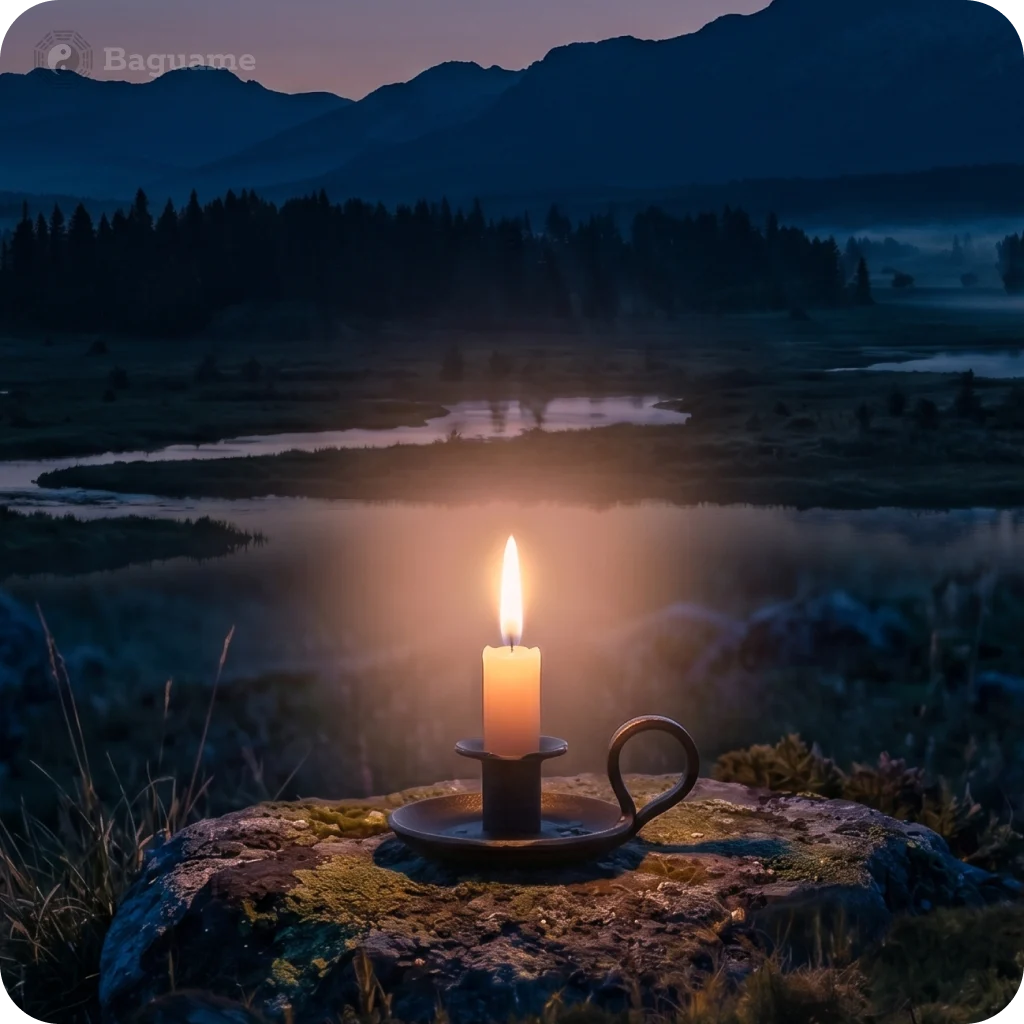
Ding is Yin energy within the Fire element — contained, refined, and strategically directed. Where Bing broadcasts to everyone at once, Ding chooses its targets. Furthermore, where Bing is transparent and open, Ding is perceptive and selective. The candle flame does not waste its light on what does not matter to it.
In classical texts, Ding is associated with intelligence, sensitivity, and a deep capacity for strategy. Ding people are often described as warm on the surface but with a cool, analytical core underneath. In practice, this makes them highly effective in situations that require both interpersonal skill and careful thinking.
Key Attributes at a Glance
Element
Fire (Yin)
Natural Image
Candle Flame · Lamp · Stars
Season / Direction
Summer · South
Polarity
Yin (even)
The Five Element Relationships
Understanding Ding requires mapping it against all five elements. The interactions below form the foundation of BaZi analysis when Yin Fire appears in any pillar.
Wood Feeds Fire (生)
Producing element. Wood (甲 Jia, 乙 Yi) generates Ding and acts as its resource. However, Yin Fire requires a specific type of fuel — in classical analysis, Yin Wood (乙 Yi) is the preferred pairing. Yi Wood is the vine, the reed, the dry grass — small, precise combustibles that feed a candle perfectly. In contrast, Jia Yang Wood is too large; it smothers rather than feeds.
Water Controls Fire (克)
Controlling element. Water (壬 Ren, 癸 Gui) restrains Ding. For Yin Fire, Water is especially dangerous — a candle can be extinguished by even a small amount. As a result, heavy Water in a Ding chart suppresses ambition and visibility. That said, a single Gui Yin Water as the Officer or Power star can provide the right structure without overwhelming the flame.
Fire — Same Element (比)
Parallel / Companion. Other Fire stems (Ding or Bing) share the pillar. Multiple candles create more light — unlike Bing, where a second sun creates excessive heat, Ding benefits from companionship in moderation. Furthermore, a Ding-Bing pairing is particularly interesting: the candle beside the sun. In such cases, the sun dominates publicly while the candle works precisely behind the scenes.
Fire Produces Earth (生)
Output element. Earth (戊 Wu, 己 Ji) is the product of Fire. For Ding people, Earth represents output energy — the results of focused effort, creative expression, and refined skill. In particular, Yin Earth (己 Ji) as output is the most natural pairing: the ash left by a candle is soft, fine, and fertile. This combination often produces people with a gift for craft and detail.
Fire Melts Metal (克)
Dominated element. Metal (庚 Geng, 辛 Xin) is dominated by Fire. In BaZi, Metal represents Wealth for Ding. However, the relationship is selective — Yin Metal (辛 Xin) is the preferred Wealth star for Ding. A candle melts a small jewel beautifully; it cannot melt a mountain of iron. As a result, Ding people tend to be best with refined, targeted wealth rather than large-scale accumulation.
The Candle and the Jewel
The most celebrated pairing for Ding in classical literature: 丁 Ding (Yin Fire, Candle) meeting 庚 Geng (Yang Metal, Sword or Ingot). When these two appear together — especially in the same pillar — the candle’s focused heat refines and transforms raw metal into something precious. Consequently, this combination appears frequently in the charts of artists, craftspeople, surgeons, and strategists: people who transform raw material through precise, sustained application of skill.
Personality Traits
The candle flame is not simply a weaker version of the Sun. It is a fundamentally different quality of light — intimate, focused, and purposeful. Below are the core traits observed in individuals with Ding as the Day Master or prominent in the chart.
Strengths
- Strategic intelligence. Ding people think before they act. In particular, they excel at reading situations, identifying leverage points, and directing effort where it will have the most impact.
- Precision and craft. The candle illuminates one thing at a time. Consequently, Ding people develop deep expertise — they are the specialists, the refined thinkers, the master craftspeople.
- Warmth that is earned. Unlike Bing‘s indiscriminate warmth, Ding’s care is selective and therefore deeply felt. When Ding trusts someone, that loyalty is profound and lasting.
- Resilience under pressure. A candle can survive wind — it bends, flickers, but rarely goes out. As a result, Ding people often show remarkable endurance in difficult circumstances.
- Perceptiveness. Ding sees what others miss. Their sensitivity to nuance, unspoken tension, and hidden motivation gives them a significant advantage in complex social environments.
Challenges
- Overthinking. The same analytical mind that makes Ding effective can become a trap. In many cases, Ding people cycle through scenarios so thoroughly that decision-making stalls.
- Vulnerability to criticism. Yin Fire is sensitive. Consequently, sharp or public criticism can extinguish motivation in ways that the same words would not affect a Bing person.
- Selective trust taken too far. While discernment is a strength, Ding can become overly guarded. For this reason, building new relationships and opening up to unfamiliar people can be genuinely difficult.
- Inconsistency of flame. A candle can be extinguished and relit — but each time, something is lost. Ding people sometimes struggle with sustained momentum when conditions become unfavorable.
- Hidden resentment. Ding does not forget. Moreover, unlike the sun which simply moves on, the candle keeps a quiet account of wrongs. Over time, this can create tension in close relationships.
Ding in the Four Pillars
The position of 丁 in the BaZi chart significantly changes its expression. The same stem behaves differently depending on whether it sits in the Year, Month, Day, or Hour pillar.
| Pillar | Domain | Expression of Yin Fire |
| Year (年) | Ancestors, social environment, early life | Refined or intellectual family background; early environment that valued skill, education, or craft over public status |
| Month (月) | Career, parents, prime years (20–40) | Career built on expertise, specialization, and precision; works best in focused roles rather than broad leadership positions |
| Day (日) | Self, spouse palace | Day Master — defines core character as described above. Spouse palace suggests a partner who is practical, grounding, or mentally stimulating |
| Hour (时) | Children, later life, hidden thoughts | Thoughtful or perceptive children; late-life fulfillment through mastery; inner world rich with ideas, analysis, and long-term planning |
Ding as Day Master — the Candle Identity
When 丁 is the Day Master, it becomes the lens through which the entire chart is read. Everything else is interpreted relative to the candle: what fuels it, what threatens to extinguish it, and what it is meant to illuminate. You can calculate your own chart using the Baguame BaZi calculator.
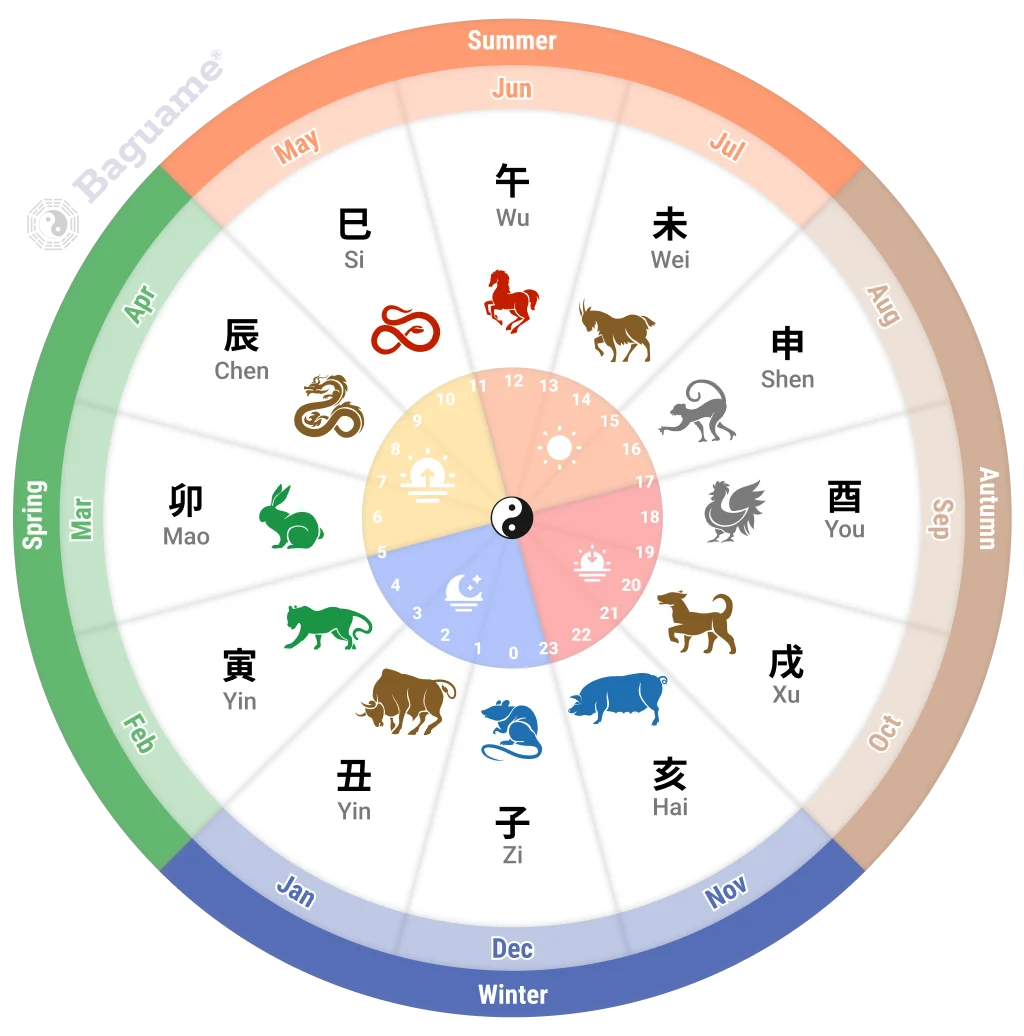
The core question for a Ding Day Master chart is: does the candle have enough fuel, and is it protected from the wind? Season and surrounding elements determine the answer.
Summer (巳 Si · 午 Wu · 未 Wei)
The Fire season strengthens Ding — however, in this season the candle risks becoming overwhelmed by excessive Fire energy. Specifically, if Yang Fire (Bing) is also present, Ding may be overshadowed. Balance requires some Water or Metal to provide contrast.
Winter (亥 Hai · 子 Zi · 丑 Chou)
This is Ding’s most vulnerable season — the candle in a cold, dark room, surrounded by Water. Consequently, the chart needs strong Wood support and companion Fire to survive. That said, a well-supported Ding in winter can be extraordinarily determined — the candle that refuses to go out.
Spring (寅 Yin · 卯 Mao · 辰 Chen)
Wood nourishes Fire, and spring provides abundant Wood. As a result, Ding in spring is well-fueled and growing. Furthermore, this is an excellent configuration for learning, building expertise, and developing the refined skills that Ding is naturally drawn toward.
Autumn (申 Shen · 酉 You · 戌 Xu)
Metal dominates the autumn season, which activates Ding’s Wealth energy. On one hand, this brings opportunity for accumulation and precision-based success. On the other hand, the Metal season can also bring pressure from external demands. Overall, Ding in autumn benefits most from clarity of purpose — knowing exactly what the candle is meant to illuminate.
Special Combinations Involving Ding
丁壬合 — Ding + Ren Combination
Yin Fire and Yang Water (壬 Ren) form a Heavenly Stem combination — one of the six stem combinations (天干合, Tiangan He). When these two meet, their energies merge and — if the seasonal energy supports Wood — can transform into Wood. In classical interpretation, this pairing represents the candle flame reflected in deep water: beauty, depth, and a quality of hidden luminosity. Furthermore, this combination often appears in people who combine emotional intelligence with outward refinement.
丁癸对冲 — Ding vs. Gui Clash
Yin Fire and Yin Water (癸 Gui) are in direct opposition — a Heavenly Stem clash (天干冲). This is the candle meeting the rain: direct and potentially fatal. In contrast to the Bing–Ren dynamic (sun and ocean, a clash of equals), the Ding-Gui clash is more asymmetric. Gui is gentle Water, yet it is precisely the type that extinguishes Yin Fire most effectively. As a result, this clash in Luck Pillars often coincides with periods of suppressed expression, health sensitivity, or loss of direction.
Ding in Feng Shui and Annual Stars
Beyond BaZi, 丁 appears in Flying Stars and annual cycle analysis. Understanding its directional and temporal associations adds another layer to professional Feng Shui practice.
Direction
Ding corresponds to a specific mountain within the South sector in the 24 Mountains system (丁 mountain, 187.5°–202.5°). In contrast to 丙 Bing which occupies the central South, Ding sits slightly to the southwest within the Fire zone. Activating this sector supports refined, precise Fire energy — useful for intellectual work, artistic expression, and focused achievement.
Annual Cycle
The 丁 year carries Yin Fire energy — more measured and internalized than a 丙 Bing year, but no less significant. Historically, 丁 years tend to bring shifts that are driven by precision and strategy rather than dramatic public events. For individuals whose charts are strengthened by Fire, 丁 years can represent periods of focused, purposeful advancement.
24 Mountains
In the 24 Mountain system, Ding mountain carries the qi of Yin Fire. A sitting or facing direction aligned to 丁 brings focused, interior Fire energy to a space — ideal for study rooms, creative studios, and any environment where sustained concentration matters. The South sector overall is governed by the Li trigram (☲), which represents radiance, clarity, and reputation.
Summary
Yin Fire 丁 Ding is the candle flame — precise, intelligent, and deeply purposeful. In contrast to its Yang counterpart, Ding does not seek to illuminate everything at once. Instead, it chooses what to illuminate, and it does so with extraordinary care and skill. That said, this selectivity is also its greatest vulnerability: without the right fuel and protection, the candle goes out.
In BaZi, a strong Ding Day Master chart belongs to someone built for mastery rather than mass visibility. The ideal configuration carries Yi Wood as fuel, Geng Metal as the Wealth target, and enough shelter from Water to let the flame burn steadily. Above all, Ding thrives in environments that reward depth, precision, and sustained focus over time.
Furthermore, understanding 丁 is foundational to reading charts where refined output and strategic intelligence are the dominant themes. Overall, it offers a counterpoint to the Yang Fire of Bing — and together, the two Fire stems cover the full spectrum of how Fire energy expresses in human character. Explore all Ten Heavenly Stems or open the BaZi calculator to see where 丁 Ding appears in your own chart.
Frequently Asked Questions
Yin Fire 丁 Ding represents the candle flame — a focused, intentional, and intimate expression of Fire energy. In BaZi, it is the fourth Heavenly Stem. People born with Ding as their Day Master tend to be intelligent, perceptive, and strategically warm. In contrast to Yang Fire (Bing), Ding directs its light with precision rather than broadcasting it to everyone at once.
Yang Fire (Bing) is the Sun — vast, open, and impossible to ignore. Yin Fire (Ding) is the candle flame — focused, selective, and deeply purposeful. Bing illuminates everything without discrimination; Ding chooses what it illuminates. In personality terms, Bing people tend to be more naturally public and extroverted, while Ding people are often more strategic, analytical, and quietly powerful.
For a Ding Day Master, Yin Wood (乙 Yi) is the most important resource — it is the ideal fuel for a candle. Furthermore, Geng Yang Metal (庚) as the Wealth star creates the classic pairing: the candle refining raw metal into something precious. The chart must also be protected from excessive Water, which can extinguish Yin Fire more easily than it affects Yang Fire.
Yin Fire is more vulnerable than Yang Fire to suppression, but that does not mean it is inherently weak. In classical BaZi, “strength” refers to the balance of the whole chart — not any single stem. A well-supported Ding with strong Wood and companion Fire can be extraordinarily resilient and effective. The candle that survives wind is, in many ways, more impressive than the sun that simply shines by default.
Ding (Yin Fire) and Ren (Yang Water) form one of the six Heavenly Stem combinations (天干合). When these two appear adjacent in a BaZi chart, their energies merge. If the seasonal qi of Wood is present, this combination can transform into Wood. On a character level, this pairing often produces people with a rare combination of emotional depth and outward refinement — the candle reflected in deep, still water.