
Yin Wood (乙 Yi) — The Second Heavenly Stem
Yin Wood, written 乙 and pronounced Yi, is the second of the Ten Heavenly Stems and the second of the two Wood stems. In contrast to Yang Wood (甲 Jia), which is the towering tree growing straight upward through every obstacle, Yin Wood is the vine, the grass, the flower, the reed — flexible, adaptive, and capable of finding a path through any environment. Where Jia pushes through, Yi winds around. Where Jia stands alone, Yi thrives by connecting.
Core Identity
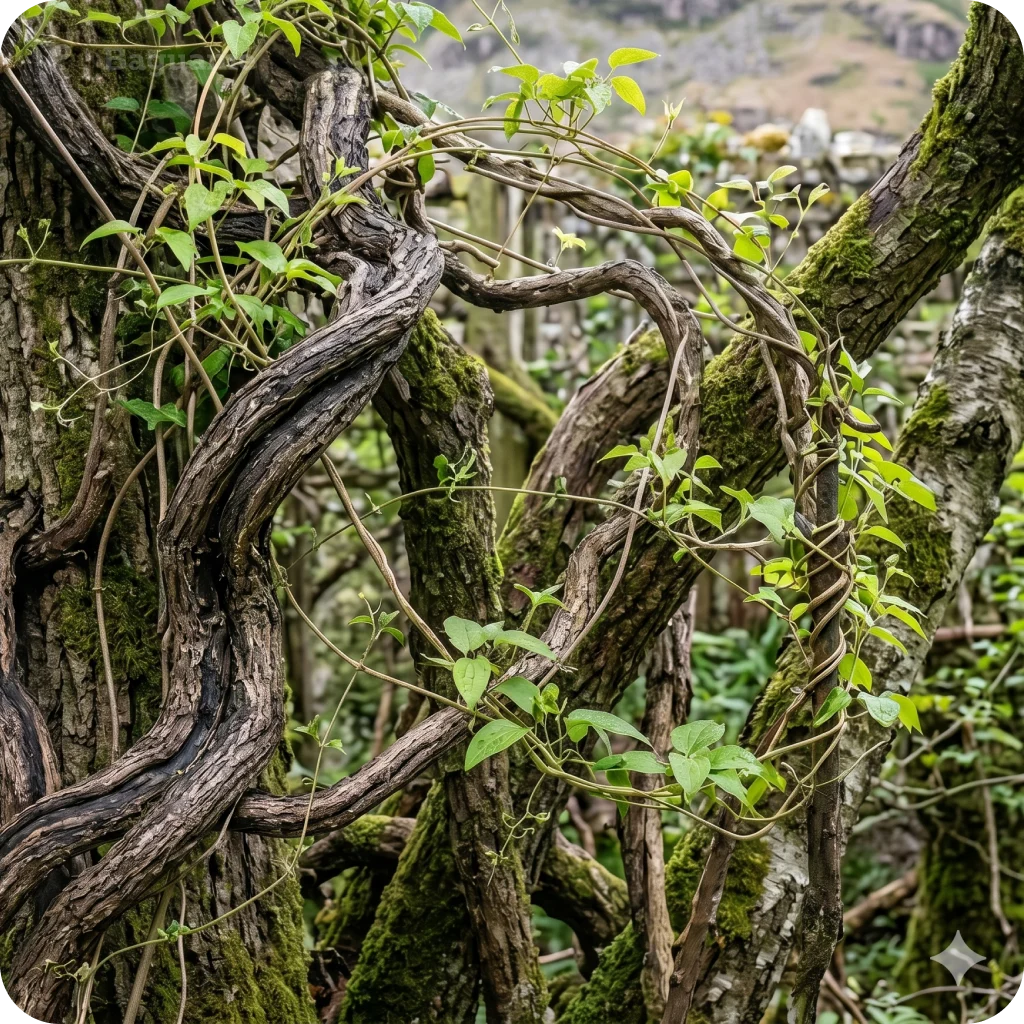
Yi is Yin energy within the Wood element — supple, perceptive, and extraordinarily resilient in its own way. In contrast to Jia, which derives strength from rigidity and vertical momentum, Yi derives strength from flexibility and connection. Furthermore, where Jia is the pioneer who clears a path, Yi is the intelligence that finds the path already there and uses it more elegantly than anyone else.
In classical texts, Yi is associated with grace, social intelligence, and a deep capacity for navigating complex human environments. Yi people are rarely the loudest voice in the room — but they are often the most effective one. In practice, this makes them remarkable diplomats, advisors, artists, and strategists: people who achieve outcomes that direct confrontation could never produce.
Key Attributes at a Glance
Element
Wood (Yin)
Natural Image
Vine · Grass · Flower · Reed
Season / Direction
Spring · East
Polarity
Yin (even)
The Five Element Relationships
Understanding Yi requires mapping it against all five elements. The interactions below form the foundation of BaZi analysis when Yin Wood appears in any pillar.
Water Produces Wood (生)
Producing element. Water (壬 Ren, 癸 Gui) generates Yi and acts as its resource. For Yin Wood, Gui Yin Water is the most natural pairing — morning dew and gentle rain nourishing grass and flowers, precisely calibrated in quantity. In contrast to Jia, which can draw from large volumes of Water, Yi requires measured nourishment. As a result, too much Water can uproot the vine just as surely as drought can wilt it.
Wood Produces Fire (生)
Output element. Fire (丙 Bing, 丁 Ding) is produced by Wood and represents Yi’s output and creative expression. Furthermore, Ding Yin Fire is the ideal output for Yi — dry grass and vine feeding a candle flame, precise and refined. In practice, this pairing produces some of the most aesthetically gifted and emotionally intelligent expressions of creative output in BaZi: the most delicate fuel feeding the most focused flame.
Wood — Same Element (比)
Parallel / Companion. Other Wood stems (Yi or Jia) share the pillar. Multiple vines can form a living structure — Yi benefits from companions more naturally than the solitary Jia does. That said, too much Wood without Fire or Metal creates an overgrowth that loses its natural grace. Furthermore, Yi alongside Jia is a classically interesting pairing: the vine climbing the great tree, using its strength as a support structure while remaining distinctly itself.
Metal Cuts Wood (克)
Controlling element. Metal (庚 Geng, 辛 Xin) restrains Yi. In BaZi, Metal is the Officer or Power star for Yi. However, the pairing matters enormously: Xin Yin Metal is the preferred controller — small scissors pruning a garden vine, shaping it into something beautiful. In contrast, Geng Yang Metal is far too blunt for Yi; an axe applied to grass simply destroys it. As a result, Yi Day Masters tend to work best within structures that are refined and intelligent rather than heavy and imposed.
Wood Controls Earth (克)
Dominated element. Earth (戊 Wu, 己 Ji) is dominated by Wood. In BaZi, Earth represents Wealth for Yi — the vine spreading through fertile soil, threading through every crack and claiming each pocket of nourishment it can reach. Specifically, Wu Yang Earth is the preferred Wealth target: a great open field of soil that vines can cover completely, transforming open ground into a garden. Yi people accumulate wealth through network, relationship, and persistent, spreading presence rather than through direct force.
The Vine and the Scissors
The most nuanced pairing for Yi in classical literature: 乙 Yi (Yin Wood, Vine) meeting 辛 Xin (Yin Metal, Scissors or Jewel). When these two appear together — especially in adjacent pillars — the scissors prune the vine into exquisite form. Consequently, this combination appears frequently in the charts of artists, stylists, editors, designers, and healers: people whose work consists of refining the living and beautiful into something precisely shaped and deeply intentional.
Personality Traits
The vine is not a smaller or weaker version of the tree. It is a fundamentally different strategy for growth — one that uses connection, adaptation, and intelligent navigation instead of raw vertical force. Below are the core traits observed in individuals with Yi as the Day Master or prominent in the chart.
Strengths
- Social intelligence. Yi people read rooms, relationships, and dynamics with remarkable accuracy. In particular, they understand what each person in a situation needs and how to position themselves accordingly — without appearing to try.
- Adaptability. The vine bends in the wind and continues growing. Consequently, Yi people navigate change, uncertainty, and setback with a graceful resilience that more rigid types genuinely cannot replicate.
- Aesthetic sensibility. Yin Wood carries a natural sense of beauty, proportion, and refinement. As a result, Yi people are often drawn to and exceptionally skilled in any domain that requires taste, elegance, or the ability to sense what is beautiful and what is not.
- Persistence through connection. The vine does not stop — it finds a new surface to climb when the old one ends. Moreover, Yi people build networks and relationships that create an accumulating foundation of support, access, and opportunity over time.
- Emotional attunement. Yi is sensitive to the needs and states of others. For this reason, they are often exceptionally effective in roles that require genuine empathy, careful listening, and the ability to respond to what is actually happening beneath the surface.
Challenges
- Indirectness. The vine never goes straight. In many cases, Yi people struggle to state needs, positions, or objections directly — preferring to approach from an angle that can read as evasiveness or lack of commitment to those who value directness.
- Over-reliance on support. The vine needs something to climb. However, Yi people can sometimes become overly dependent on particular relationships, structures, or environments — struggling to function when those supports are removed.
- Difficulty holding a position. Flexibility is a strength until it becomes shapelessness. Consequently, Yi people can sometimes appear inconsistent — adjusting their stance so readily to social context that others struggle to know where they actually stand.
- Sensitivity to criticism. Yin Wood is delicate. For this reason, direct or harsh feedback can have a disproportionate impact — wilting the vine in a way that blunter types find difficult to understand or anticipate.
- Hidden tenacity misread as weakness. Above all, Yi is frequently underestimated. The quiet persistence of a vine is invisible until the wall it has been climbing for years is completely covered. This underestimation can work in Yi’s favor — but it can also become a frustration when genuine capability goes unrecognized.
Yi in the Four Pillars
The position of 乙 in the BaZi chart changes its expression significantly. The same stem operates differently depending on whether it appears in the Year, Month, Day, or Hour pillar.
| Pillar | Domain | Expression of Yin Wood |
| Year (年) | Ancestors, social environment, early life | Graceful or culturally refined family background; early environment that valued relationships, aesthetics, and social skill over direct ambition or confrontation |
| Month (月) | Career, parents, prime years (20–40) | Career built on social intelligence, diplomacy, and aesthetic or relational skill; works best in environments where connection and adaptability are valued over rigid hierarchy |
| Day (日) | Self, spouse palace | Day Master — defines core character as described above. Spouse palace suggests a partner who provides strength, structure, or the grounding energy that gives the vine something solid to grow toward |
| Hour (时) | Children, later life, hidden thoughts | Artistically gifted or socially perceptive children; late-life fulfillment through relationship and beauty; inner world rich with nuance, aesthetic sensitivity, and a constant attunement to the quality of experience |
Yi as Day Master — the Vine Identity
When 乙 is the Day Master, the entire chart is read through the lens of the vine. The key questions are: what is this vine climbing, how well is it nourished, and is it being shaped purposefully or left to grow wild? You can calculate your own chart using the Baguame BaZi calculator.
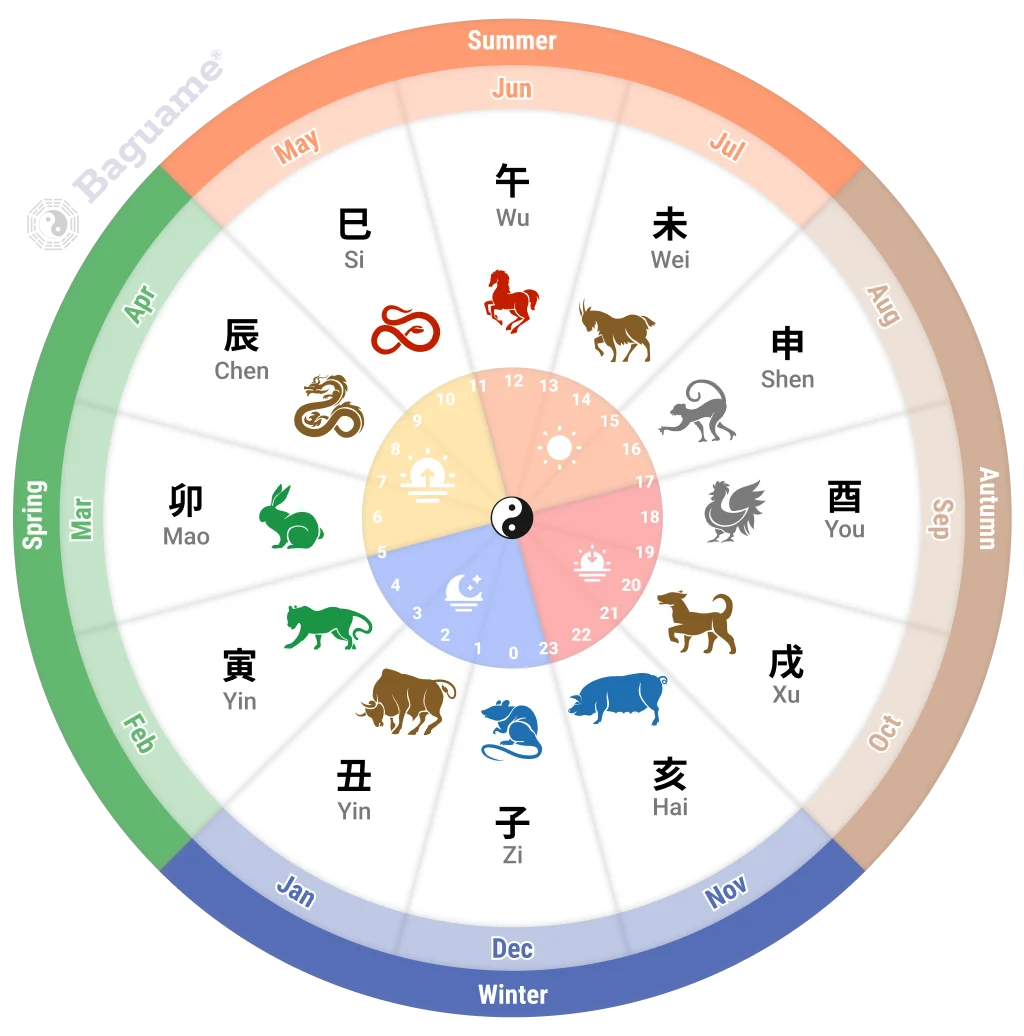
The central question for a Yi Day Master is: does this vine have good support to climb and enough light to grow toward? Season shapes the starting conditions fundamentally.
Spring (寅 Yin · 卯 Mao · 辰 Chen)
Yi in its home season — Wood energy abundant, growth natural and rapid. Consequently, this is the most productive configuration for Yin Wood at a basic level. However, strong Wood in spring without Metal to prune it can produce overgrowth — talent without discipline, charm without direction. That said, a spring Yi with Xin Metal and Ding Fire is among the most elegant chart configurations in classical BaZi.
Autumn (申 Shen · 酉 You · 戌 Xu)
Metal dominates autumn — the pruning season. As a result, this is Yi’s most challenging configuration: the scissors are everywhere, and the vine must be strong enough to survive being shaped. In practice, autumn Yi charts often show people of exceptional discipline and refinement — provided Water is present to keep the roots nourished. Furthermore, this configuration frequently produces people who achieve mastery precisely because they have been tested and refined by persistent external pressure.
Summer (巳 Si · 午 Wu · 未 Wei)
Fire output season — the vine feeding a warm, beautiful flame. In this configuration, Yi’s creative expression flows naturally and visibly. Overall, summer Yi charts carry strong aesthetic and expressive energy. In particular, Water resource becomes essential here: the vine needs moisture to keep producing without wilting under the heat of its own output.
Winter (亥 Hai · 子 Zi · 丑 Chou)
Water resource season — deep nourishment from below. On one hand, winter provides Yi with rich intellectual and emotional support. On the other hand, excessive Water can uproot Yin Wood or leave it floating without direction. Therefore, Fire in the chart is critical in winter Yi configurations — providing the warmth that draws the vine upward toward the light.
Special Combinations Involving Yi
乙庚合 — Yi + Geng Combination
Yin Wood and Yang Metal (庚 Geng) form a Heavenly Stem combination — one of the six stem combinations (天干合, Tiangan He). When these two meet, their energies merge and — if Metal season supports it — can transform into Metal. In classical interpretation, this is the vine entwining the axe: softness wrapping around force, flexibility meeting power. Furthermore, this combination often appears in people who achieve significant things by making themselves indispensable to powerful structures — working within authority rather than against it, and ultimately shaping it from the inside.
乙辛对冲 — Yi vs. Xin Clash
Yin Wood and Yin Metal (辛 Xin) are in direct opposition — a Heavenly Stem clash (天干冲). This is the vine meeting the scissors in conflict rather than cooperation. In contrast to the Jia–Geng clash between tree and axe — a collision of large forces — the Yi-Xin clash is intimate and precise: small blade meeting delicate growth. As a result, this clash in Luck Pillars often brings disruptions to relationships, creative projects, or refined structures that have been carefully built — things that require gentleness to survive but are instead meeting something sharp.
Yi in Feng Shui and Annual Stars
Beyond BaZi, 乙 appears in Flying Stars and annual cycle analysis. Understanding its directional and temporal associations adds a practical dimension to any Feng Shui work with Wood energy and the East sector.
Direction
Yi corresponds to a specific mountain in the East sector of the 24 Mountains system (乙 mountain, 82.5°–97.5°). In contrast to 甲 Jia which leads into the East, Yi exits the East sector toward the southeast — transitioning toward the Wood-Wind zone of Xun. Activating the Yi sector brings refined, relational Yin Wood energy into a space, supporting collaboration, artistic work, and environments where social grace and aesthetic sensitivity matter.
Annual Cycle
The 乙 year carries Yin Wood energy — adaptive, relational, and quietly expansive. Historically, 乙 years tend to bring growth through connection and accumulation rather than dramatic new beginnings. In contrast to the initiating energy of a 甲 Jia year, the 乙 year consolidates and expands what was started, building networks and relationships that become the foundation for the next cycle. For individuals whose charts are strengthened by Wood, 乙 years reward social investment and refinement of existing projects.
24 Mountains
In the 24 Mountain system, Yi mountain carries the qi of Yin Wood. A sitting or facing direction aligned to 乙 brings flexible, relational Wood energy into the environment — ideal for creative studios, meeting spaces, and any environment where collaboration and aesthetic refinement are central. The East sector overall is governed by the Zhen trigram (☳), representing new growth, initiation, and the dynamic energy of spring awakening.
Summary
Yin Wood 乙 Yi is the vine — the second of the Ten Heavenly Stems and, in many ways, the most elegantly complex. The vine does not compete with the tree for the same space. Instead, it finds the wall the tree cannot climb, the crack the tree cannot fit through, the relationship the tree cannot form. Specifically, Yi achieves through intelligence, connection, and the kind of persistent, adaptive growth that is easy to overlook until it has covered everything.
In BaZi, a strong Yi Day Master chart belongs to someone built for influence through relationship rather than command. However, the chart must provide the right conditions: gentle Water to nourish, refined Metal to shape, and Fire to give direction to the vine’s creative output. Above all, Yi thrives in environments that reward nuance, social skill, and the long-term cultivation of quality over the short-term assertion of force.
Furthermore, understanding 乙 completes the Wood pair alongside 甲 Jia — the towering tree and the climbing vine, two entirely different strategies for the same fundamental drive toward growth and light. Together, they show the full range of how Wood energy expresses across human experience. Explore all Ten Heavenly Stems or open the BaZi calculator to see where 乙 Yi appears in your own chart.
Frequently Asked Questions
Yin Wood 乙 Yi represents the vine, grass, and flower — the flexible, adaptive, and quietly persistent form of Wood energy. In BaZi, it is the second Heavenly Stem. People born with Yi as their Day Master tend to be socially intelligent, aesthetically sensitive, and remarkably resilient through adaptability rather than force. In contrast to Yang Wood (Jia), Yi achieves its goals by finding the path around obstacles rather than through them.
Yang Wood (Jia) is the towering tree — singular, upright, and growing straight through every obstacle. Yin Wood (Yi) is the vine — flexible, adaptive, and growing around obstacles by finding the path of least resistance. In personality terms, Jia people tend to be more directly ambitious, principled, and leadership-oriented, while Yi people are often more socially fluid, strategically indirect, and effective in complex relational environments. Both are Wood — but the strategies they use to grow could not be more different.
For a Yi Day Master, Gui Yin Water as resource (morning dew nourishing the vine) and Xin Yin Metal as the Officer star (scissors pruning into shape) are the most important structural elements. Additionally, Ding Yin Fire as output creates the most natural and refined expression: dry vine feeding a candle flame. The key distinction from Jia is scale — Yi works best with precise, measured inputs rather than large volumes of any element.
The 乙庚 combination — Yin Wood and Yang Metal — is one of the most discussed dynamics in the six Heavenly Stem combinations. When Geng acts as the combining partner for Yi, the result is the vine entwining the axe: something soft and persistent wrapping around something powerful and blunt. Furthermore, this combination can transform into Metal when the season supports it, representing Yi’s capacity to internalize and embody structure rather than simply submit to it. It frequently appears in the charts of people who work effectively within powerful organizations while remaining distinctly themselves.
No — and this is one of the most persistent misconceptions about Yi in BaZi. The vine is not weaker than the tree; it is differently strong. Specifically, grass survives fires that burn down forests, because it grows back from the roots. Vines outlast walls by finding the cracks that stone cannot seal. In classical analysis, Yi’s strength is its capacity to persist, adapt, and ultimately cover everything — a form of dominance that looks like flexibility but is in fact one of the most sustainable forms of growth in the entire Ten Stems framework.