Feeling stuck, distracted, or uninspired in your home office? It’s a common complaint. The solution might not be a new planner or productivity app, but a shift in your physical environment. The most effective feng shui for home office is all about strategically arranging your space to improve the flow of energy, or Chi, creating a place that actively supports focus, creativity, and career growth.
If walking into your office makes you feel instantly drained, that’s a clear sign the energy in the room is either stagnant or completely out of whack. Feng Shui gives us a practical framework to figure out why and then fix it with intentional changes that go way beyond just tidying up. The whole point is to design a space that works for you, not against you.
This isn’t about abstract rules or superstition; it’s rooted in the subtle psychology of how your surroundings affect you. A messy desk, for example, isn’t just an eyesore. It’s a constant, low-level visual distraction that slowly eats away at your mental bandwidth. Likewise, sitting with your back to the door can trigger a primal, subconscious feeling of vulnerability, making it nearly impossible to settle into a state of deep, focused work.
At its heart, the practice revolves around a few powerful concepts that are surprisingly easy to grasp. Once you understand them, you can start making meaningful changes right away.
The real power of Feng Shui in a home office comes from making conscious choices. It’s about designing a space that sends your subconscious the right signals—signals of support, control, and opportunity.
Before diving into complex charts, you can make a significant difference by applying these foundational ideas. The table below outlines some immediate, practical actions you can take to improve your workspace’s energy.
| Principle | Objective | Quick Action |
|---|---|---|
| Command Position | Feel in control and secure. | Move your desk so you can see the door without being directly in front of it. |
| Declutter | Create smooth Chi flow. | Clear your desktop of everything but the essentials for your current task. |
| Lighting | Boost Yang (active) energy. | Open blinds to let in natural light or add a bright desk lamp. |
| Incorporate Nature | Introduce growth and vitality. | Add a small, healthy plant to a corner of your desk or a nearby shelf. |
| Support Your Back | Provide a sense of stability. | Ensure your chair has a high, solid back and is positioned against a solid wall. |
These small adjustments can create a surprisingly noticeable shift in how you feel and perform in your office. They are the building blocks for a more harmonious and productive environment.
So, how do you go deeper? Traditionally, applying advanced Feng Shui systems like Flying Stars (which maps time-based energies) or Eight Mansions (which identifies your personal directions for success) required complex, manual calculations. This often made a true analysis accessible only to seasoned experts with years of training.
Thankfully, technology has bridged that gap. A professional-grade tool like Baguame replaces the need for manual calculations. It is designed for people who want to practice independently, without needing to hire a consultant for every little change. You can simply upload your floor plan, and the software instantly overlays these intricate energy charts onto your space. It translates ancient wisdom into clear, actionable guidance, empowering you to optimize your office with genuine confidence.
To get real results from Feng Shui in your home office, you first need to understand the unique energy flowing through it. Think of it like a weather map, but instead of tracking storms, you’re pinpointing the supportive or disruptive forces that affect your work every day. Two classic Feng Shui systems give us this essential blueprint: the Bagua Map and the Eight Mansions theory. These aren’t just abstract concepts; they’re practical tools for seeing what your office is truly made of, energetically speaking.
The Bagua Map is an energy grid that you overlay on your floor plan. It divides the space into nine specific zones, or “guas,” each corresponding to a different area of your life—like Wealth & Abundance, Fame & Reputation, or your overall Career path. An immediate action you can take is to identify your office’s ‘Career’ zone and ensure it’s clean and well-lit. You can find a complete walkthrough on how the grid works in our guide on using the Bagua map for your home.
While the Bagua Map applies to the physical space, the Eight Mansions system gets much more personal. In simple terms, this method uses your birth date to identify your four most supportive directions and four most challenging ones. This is the secret to aligning yourself, quite literally, with the energies that support you best.
For instance, sitting at your desk to face your Sheng Chi (Prosperity) direction can be a game-changer for generating new ideas and opportunities. On the other hand, facing one of your challenging directions might leave you feeling like you’re constantly swimming upstream. As an immediate step, you can find your Kua number online and orient your chair toward your best direction, even if it’s just a slight adjustment.
The real magic happens when you see how these two systems interact. You might find that your office’s “Wealth” corner also happens to be your personal “Success” direction. That’s a powerhouse spot you absolutely want to activate for career growth.
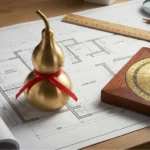
Not long ago, creating these charts was a huge pain. It meant wrestling with a compass, architectural rulers, and a ton of confusing calculations. It was incredibly easy to make a small mistake that would throw off the entire analysis, which is why most people had to hire an expensive consultant.
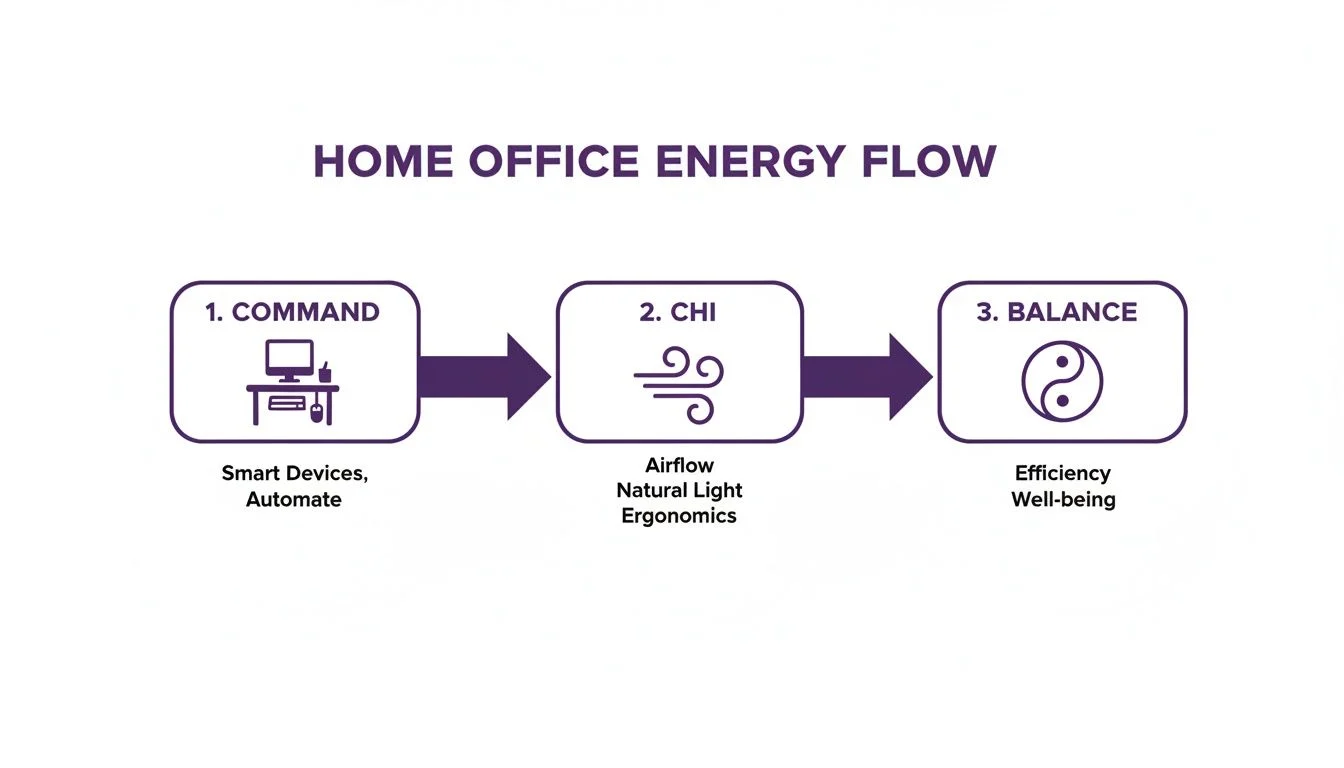
This diagram breaks down the core principles for a high-performance workspace. It all starts with establishing a command position, encouraging smooth energy (Chi) flow, and then layering in elemental balance to create a space that truly supports you.
Thankfully, we don’t have to do that anymore. Today’s software handles all the heavy lifting. All you have to do is upload a digital image of your floor plan. The platform’s automation does the rest, instantly and accurately overlaying both the Bagua map and your personalized Eight Mansions chart right onto your layout.
This gives you immediate, practical insights that used to take a seasoned expert hours to figure out. You can see at a glance exactly where each energy zone is and which directions will help you focus and be more productive. While the tool is professional-grade, it’s designed for independent practice, empowering you to perform a sophisticated audit of your own feng shui for home office without needing years of training.
So you’ve mapped out the foundational energy of your office. That’s a fantastic start, but it’s only half the picture. The energy in any space isn’t set in stone; it flows and changes with time, almost like the turning of the seasons. This is where we bring in a more advanced, dynamic layer of analysis: Flying Star Feng Shui.
In simple terms, Flying Star Feng Shui is about tracking annual energy shifts. Imagine nine different types of energy, some good and some challenging, that “fly” into new sections of your home each year. Knowing where they land allows you to boost the good energy and calm the bad.
I like to think of these stars as energetic visitors. They show up and take residence in different rooms for the year, and each one has a very different personality.
For 2026, knowing where these stars will land in your specific home office is everything. Imagine discovering that a powerful wealth star is visiting your “Fame and Reputation” zone. That’s a huge clue! It tells you precisely where to focus your energy to attract positive attention and draw in new clients.
The real power of Flying Stars is in proactive management. When you know the energetic forecast for the year, you can intentionally place yourself in the path of opportunity and sidestep potential problems before they even start.
This proactive approach is what creates a truly powerful feng shui for home office that supports you year after year. If you want to dive deeper into the overarching themes of the year, you can read more about the 2026 Year of the Fire Horse and how its unique signature will color the energy of the stars.
In the past, figuring out a Flying Star chart was a job strictly for the pros. It required a deep understanding of complex formulas that combined a building’s age and orientation with the annual chart. Honestly, it was a headache—time-consuming and incredibly easy to get wrong.
This complexity meant that getting professional-grade insights was just too difficult and expensive for most people.
Thankfully, technology and automation now handle all the heavy lifting. This sophisticated layer of Feng Shui is no longer out of reach.
Instead of wrestling with charts and compass readings, you can now use a service that does all the work behind the scenes. You just upload your floor plan, mark your home’s North orientation, and you can instantly generate and overlay the correct 2026 Flying Star chart for your exact space.
This is a complete game-changer. It gives you the power to see exactly where each star’s influence will be felt in your home office this year.
While this tool is professional-grade, it’s designed for you to use on your own. You don’t need years of study to conduct a detailed audit of your own space. You get the ability to make targeted, effective adjustments, ensuring your home office remains a hub of productivity and success, no matter what energies the year brings.
Once you’ve mapped out your office’s energy—both the permanent and the yearly influences—it’s time for the fun part: making real changes. And let me tell you, out of all the tweaks you can make, nothing has a more immediate and powerful effect than where you put your desk. This is your command center. Its placement single-handedly defines how you engage with the room’s energy and, by extension, your career momentum.
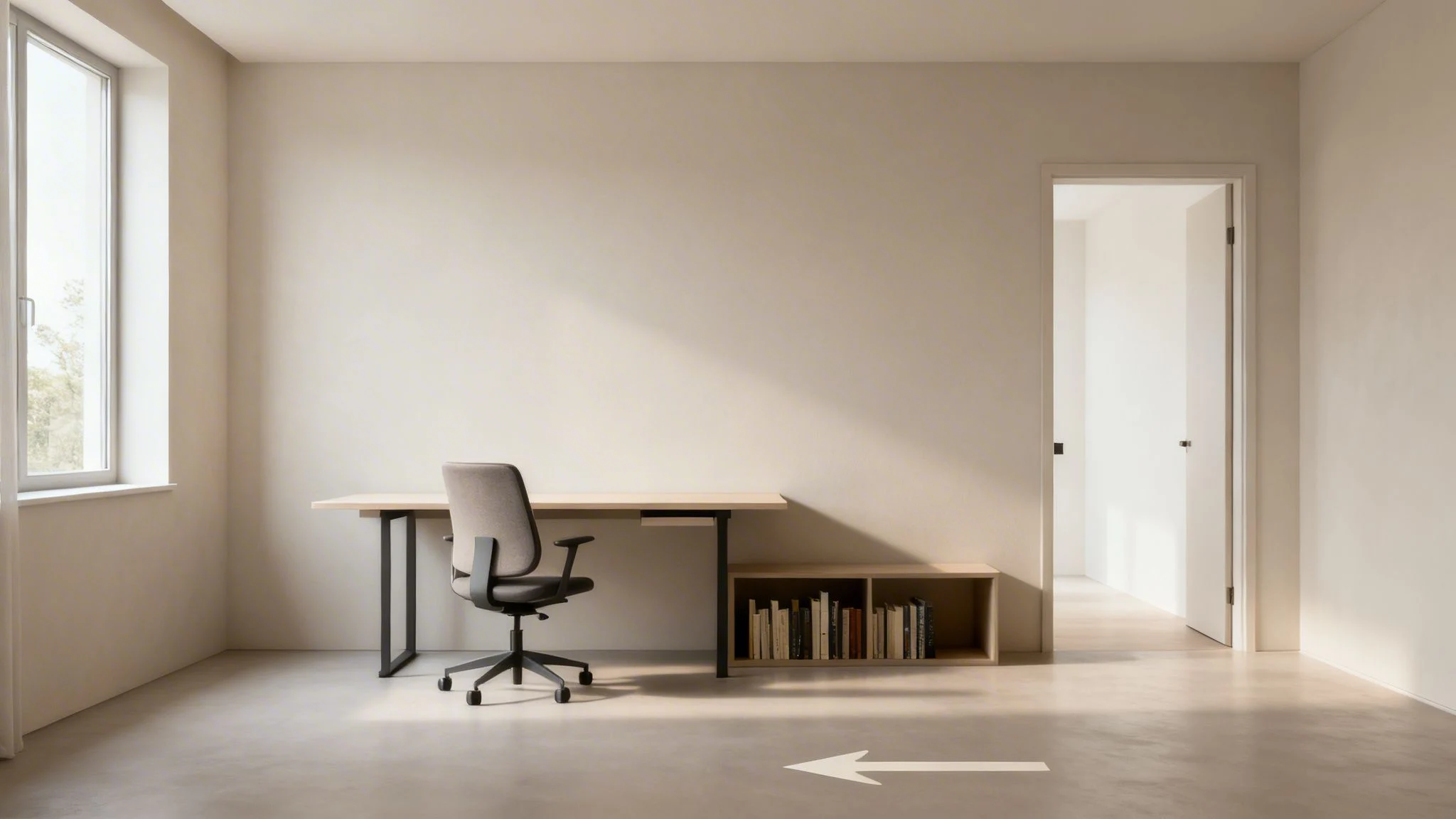
The most crucial concept here is the Command Position. This isn’t just some esoteric Feng Shui rule; it’s hardwired into our primal need for security. An actionable step you can take right now is to move your desk so you have a solid wall behind you for support and a clear view of the door, but not directly in line with it.
This arrangement sends a subconscious signal to your brain: you are in control. You see opportunities (and people) as they arrive, and you know nothing can sneak up on you. This simple shift frees up a surprising amount of mental energy that would otherwise be wasted on low-grade anxiety, letting you sink into that deep, focused work we’re all after.
Beyond the universal Command Position, we can get even more specific using the insights from the Eight Mansions system. As you know, this system pinpoints your best personal directions based on your birth date. Aligning your desk to face one of your auspicious directions is like tuning a radio to a crystal-clear station instead of static.
For work and career, your top direction is Sheng Chi, also known as your “Success” direction. When you sit facing your Sheng Chi, you’re aligning yourself with the energetic flow of prosperity, growth, and fresh opportunities. It’s the perfect orientation for anything that requires strategic thinking, creativity, or closing a deal.
The ultimate power move for any home office is combining the Command Position with your personal Sheng Chi direction. This puts you in a physically secure spot while energetically aligning you with your unique frequency for success.
Think about your floor plan loaded into an interactive tool like Baguame. You can see your Sheng Chi direction clearly marked. Now, you can just drag your desk icon around the room. The automation replaces manual guesswork, instantly showing you whether a spot gives you both the command view and faces your power direction. It turns a complex puzzle into a simple, visual exercise.
Knowing what not to do is just as critical as knowing what to do. I’ve seen certain desk arrangements create “Sha Chi,” or harmful energy, that can actively sabotage your efforts.
Don’t panic if your room’s layout makes avoiding these a challenge. There are always fixes. If you have to face a wall, hang a beautiful landscape painting to create a sense of depth and open up your “view.” If your back must be to the door, a small, strategically placed mirror on your desk or monitor can give you a clear reflection of the entrance, restoring your command.
While a tool can give you a professional-grade analysis, it’s designed for your own personal practice. It gives you the power to make these crucial decisions with confidence, ensuring your feng shui for home office setup is always fine-tuned for your best work.
A well-designed home office should do more than just feel good; it should be an engine for your financial success. Now that your desk is set up in a powerful position, we can get into the nitty-gritty of attracting wealth and—just as crucial—guarding against those sneaky, hidden career drains.
Many of these drains come from outside your home, from what we call Sha Chi, or negative energy. These are often subtle but persistent influences that can chip away at your focus and financial stability. You might not even realize why things feel like an uphill battle. The key is learning to spot these energy drains and apply simple, practical fixes.
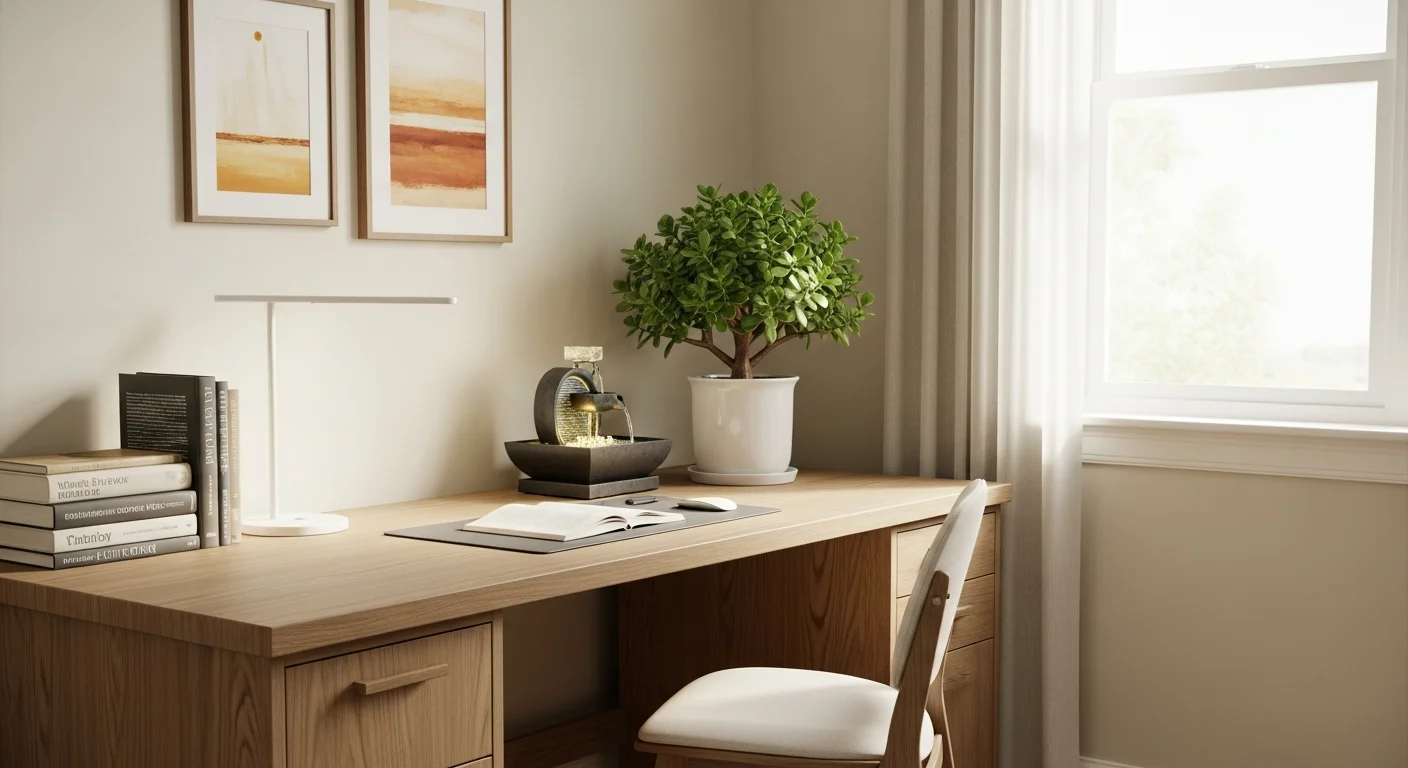
One of the most common forms of Sha Chi I see in clients’ homes is “road rush.” This happens when your desk faces a window looking directly onto a busy street, a highway, or even a long, straight path leading to your door. Another classic example is a “poison arrow”—the sharp corner of a neighboring building pointed right at your office window.
Think of your workspace as a container for opportunity. When it’s constantly bombarded by aggressive external energy, it’s like trying to fill a cup that has a crack in it. The goal is to patch the cracks so you can finally start to accumulate positive results.
The good news? You don’t need a major renovation to fix these issues. You can counteract these influences with a few straightforward, actionable adjustments:
The impact of these external factors isn’t just folklore. In a detailed analysis of over 10,000 real estate transactions, researchers found that properties facing negative Feng Shui features, like road rush, consistently sold for lower prices. The study showed these traditional principles have a direct, measurable effect on market economics, especially in premium office spaces. You can read the full research on how Feng Shui affects property values to see the data for yourself.
Beyond the permanent features of your environment, we also have to account for temporary negative energies that shift locations every single year. These are known as the annual afflictions, with the two most important ones for your career being the Tai Sui (Grand Duke Jupiter) and the Three Killings.
These concepts can sound intimidating, but they are really just names for specific directions that carry challenging energy for the year. For instance, facing the Tai Sui while you work can lead to direct conflict with your boss or clients. Having your back to the Three Killings can open you up to betrayal or unexpected setbacks. While your Sheng Chi direction is excellent for wealth, you can explore the differences in our article about choosing between Sheng Qi vs Tian Yi for wealth.
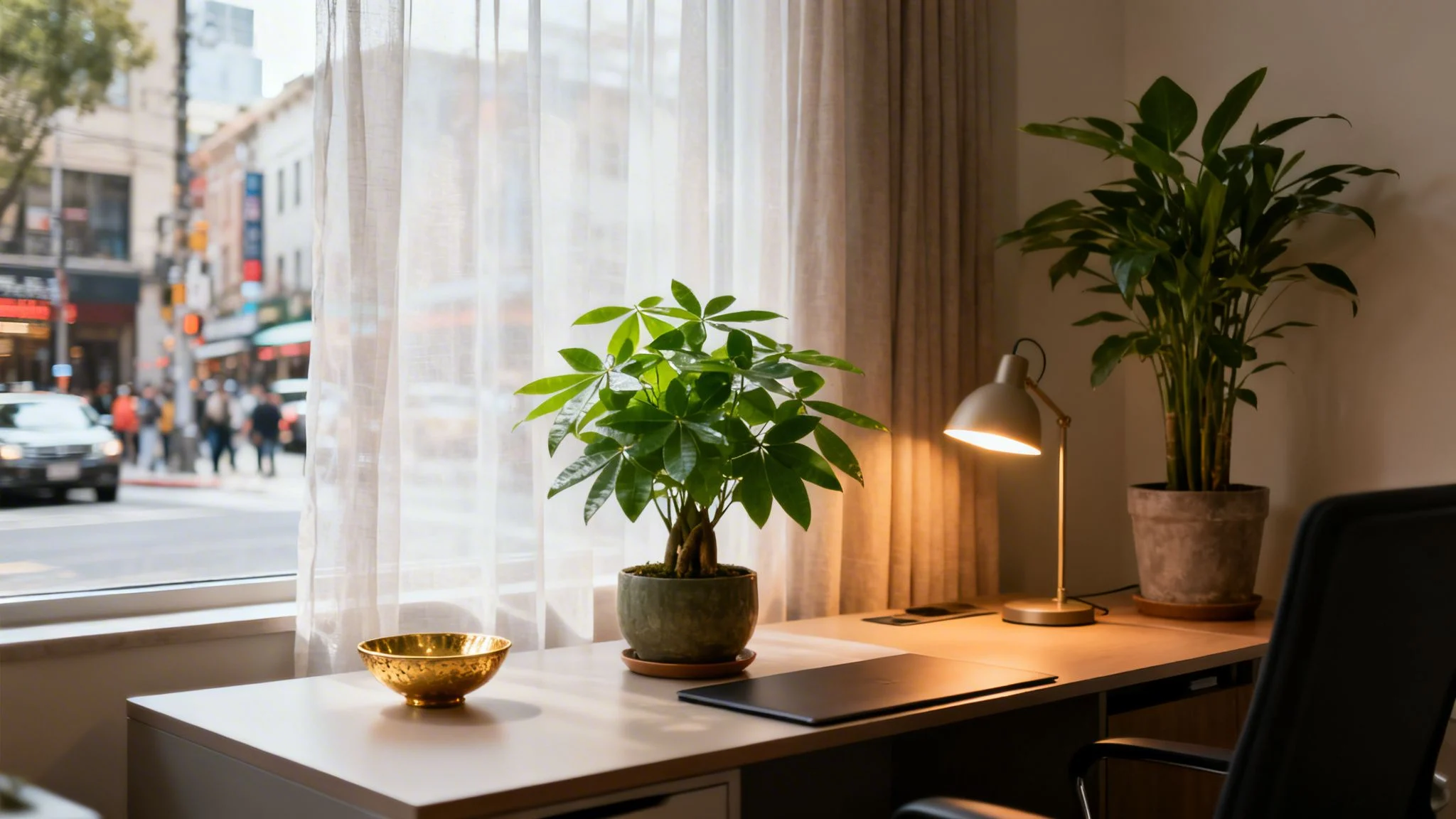
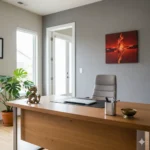
Here’s a great example of a workspace with a large window. By adding plants and having the option of blinds, the person working here can easily manage the energy coming from the street.
This is where a modern tool like Baguame really shines, replacing the need to flip through charts or memorize complex formulas. Technology and automation overlay the exact locations of the Tai Sui and Three Killings right onto your floor plan for the current year. You can see in an instant if your desk is in their path and make a quick adjustment, protecting your career from these unseen energetic hurdles. It turns ancient wisdom into a practical, modern tool for career growth.
When you start applying Feng Shui principles, you’ll inevitably run into a few real-world hurdles. It’s one thing to read about the theory, but another to make it work in your actual space. Let’s tackle some of the most common questions and challenges that pop up.
This is hands-down the most frequent problem I hear about, especially with small or awkwardly shaped rooms. If you can’t get that solid wall behind you and a clear view of the door, don’t worry. You don’t have to give up on the powerful sense of security the command position provides.
The simplest, most effective workaround is a well-placed mirror. As an immediate action, get a small, stable one for your desk or even attach a little rearview mirror to your monitor. Angle it just right so you can see the reflection of the doorway without turning your head. This one little trick restores that feeling of control, letting you know who’s coming and going.
Another option is to create a “symbolic” wall. A tall, solid bookshelf or a stylish folding screen placed behind your chair works wonders. It provides that energetic backing, making you feel less vulnerable and more supported, even if it’s not a real wall.
This is a classic modern-day dilemma. When your office shares space with your personal life, the key is creating a firm energetic boundary. You need to tell the energy (and your brain) when it’s time to work and when it’s time to rest.
Physical separation is your best friend here. A folding screen, a strategically placed bookshelf, or even a simple curtain can visually and energetically wall off your workspace. At the end of the day, make a ritual of closing it off. A practical step is to simply drape a beautiful cloth over your computer to signal the shift from active “Yang” work energy to restful “Yin” energy.
A non-negotiable rule for any multi-purpose space: never work from your bed. This blurs the lines between work and rest, leading to a nasty cycle of restless sleep and unfocused workdays.
Absolutely. They are the tools you use to balance the Five Elements: Wood, Fire, Earth, Metal, and Water. Think of it like a painter’s palette—each element has corresponding colors, shapes, and materials that you can use to fine-tune the energy in your office.
For example, let’s say your Bagua map shows your “Fame and Reputation” area needs a boost. This area is governed by the Fire element, so you could introduce red decor, triangular shapes, or brighter lighting to activate it. A practical action is to place a red-colored lamp or candle in that corner. You could also add a plant (a Wood element) because in the elemental cycle, Wood fuels Fire.
On the flip side, if the annual Flying Star chart reveals a troublesome star in your office—like the sickness-related #2 Star (an Earth element)—you’d want to weaken it. You would do this by introducing Metal element items, like objects that are white, gray, silver, or made of metal.
You can definitely apply the basics—like decluttering and aiming for the command position—without any tools. But when you want to get into the really impactful stuff, a modern software platform becomes a game-changer. The automation replaces the incredibly complex calculations for advanced systems like Flying Stars and Eight Mansions, which used to require a trained consultant.
This technology removes the guesswork and potential for human error. It gives you instant, personalized charts laid directly over your floor plan. For anyone serious about practicing sophisticated feng shui for home office analysis, it’s an incredible asset that provides professional-level insights without the years of study.
Even though a tool like Baguame delivers professional-grade analysis, it’s built for you to use on your own. It translates complex traditional concepts into clear, actionable steps you can take right away to improve your focus, productivity, and well-being. It truly puts the power of classical Feng Shui right in your hands.
Ready to take control of your home office energy? With Baguame, you can go from a simple floor plan to actionable insights in just a few minutes, creating a workspace that genuinely supports your success. Start your personalized Feng Shui audit today.