
Tai Sui (Grand Duke Jupiter): How to Appease the Ruler of the Yea
This article is a detailed deep dive into Tai Sui, one of the four major annual energy shifts in Feng Shui.
To get the full picture of all potential threats this year—including the 5 Yellow, Sui Po, and the Three Killings—and to learn the essential safety rules for your home, we highly recommend starting with our master guide:
Annual Feng Shui Afflictions: A Complete Guide to Protecting Your Home
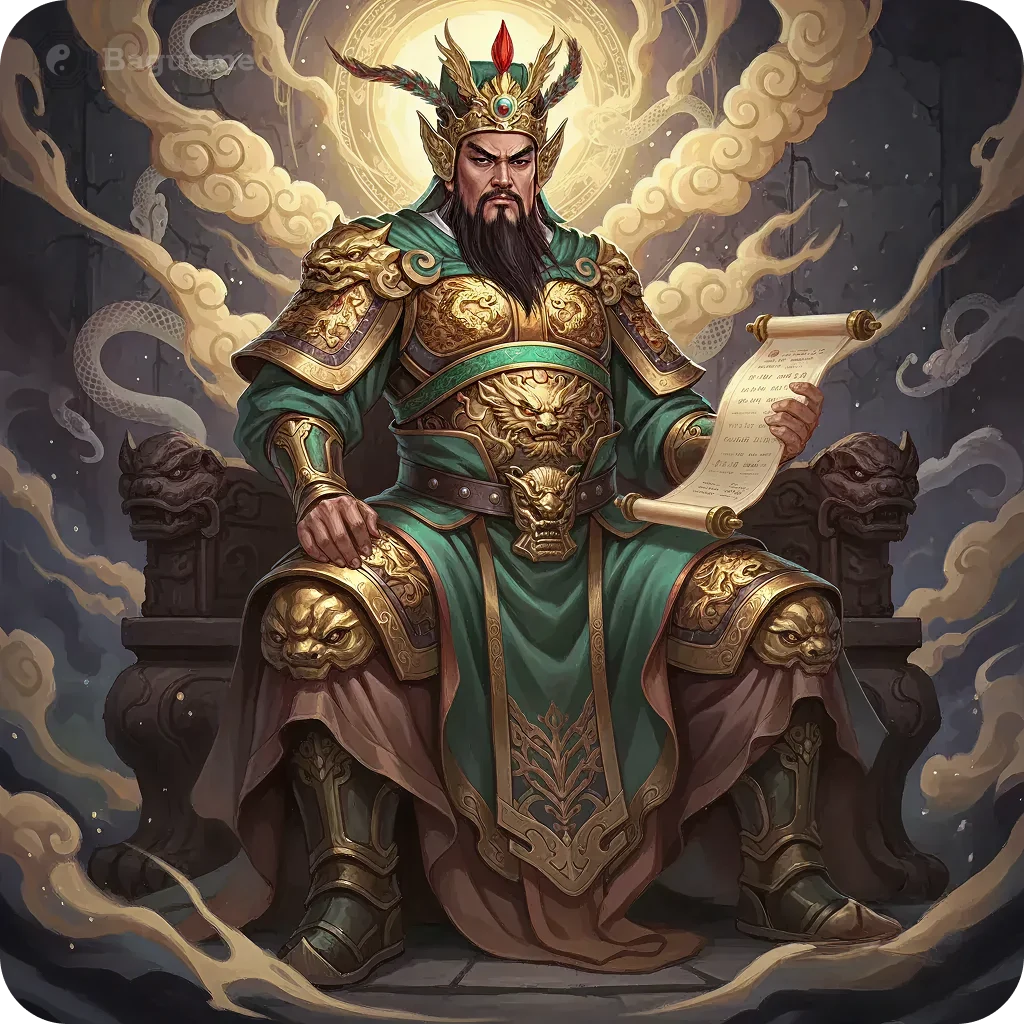
Of all the shifting energies in Feng Shui, none commands more respect than Tai Sui (太岁), also known as the Grand Duke Jupiter.
In many Asian cultures, the phrase “offending Tai Sui” is synonymous with inviting a year of obstacles, legal issues, career setbacks, and general misfortune. But Tai Sui is not an evil spirit out to get you. In classical Feng Shui, Tai Sui represents the most powerful directional energy of the year, governed by the position of the planet Jupiter.
Think of Tai Sui as the presiding Emperor or General for the current year. When the Emperor is present, you do not behave loudly, disrespectfully, or confront him directly. You show respect, and in return, he offers support.
This guide will explain the golden rules of interacting with this powerful energy to ensure a smooth year ahead.
What (and Where) is Tai Sui?
Astronomically, Tai Sui corresponds to the position of Jupiter, which takes roughly 12 years to orbit the Sun. This cycle aligns with the 12 animal signs of the Chinese Zodiac.
Every year, Tai Sui occupies the 15-degree mountain direction of the ruling Zodiac animal.
-
Example: In the Year of the Dragon, Tai Sui is located in the Dragon direction (Southeast-1, roughly 112.5° – 127.5°).
Because this specific 15-degree slice changes annually, accurate measurement is crucial. A general idea that “Tai Sui is in the Southeast” is often too broad for safe renovations.
The Golden Rules: Facing vs. Sitting
The most confusing aspect for beginners is how to position themselves relative to Tai Sui. There is a vital difference between “facing” and “sitting.”
Rule 1: NEVER Face Tai Sui (Confrontation)
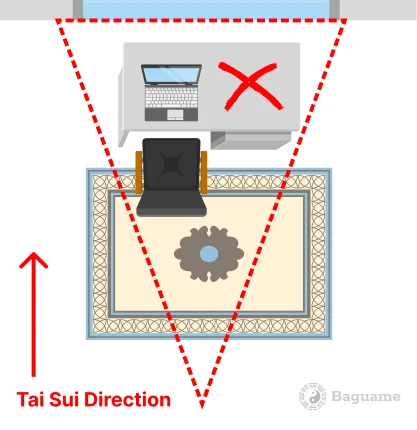
The rule: “Do not sit facing the Grand Duke.”
If your desk or favorite sofa is positioned so that you are looking directly toward the Tai Sui direction while working or relaxing, you are in direct confrontation with the ruler of the year.
-
The Risk: This is seen as disrespectful and rebellious. It can lead to conflicts with authority figures (bosses, government officials, police), legal disputes, and significant obstacles in your career advancement
Rule 2: DO Sit With Your Back to Tai Sui (Support)
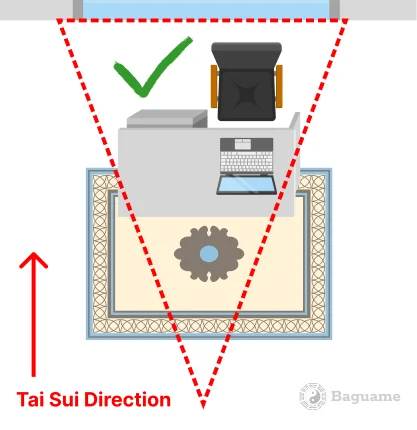
The rule: “Have the Grand Duke support your back.”
This is the ideal position. If Tai Sui is in the Southeast, position your desk so that your back is toward the Southeast, and you are facing Northwest.
-
The Benefit: When Tai Sui is behind you, he acts as a powerful backer. This position offers strong support, authority, and helps you command respect in your endeavors throughout the year.
The “No Noise” Rule: Renovations and Digging
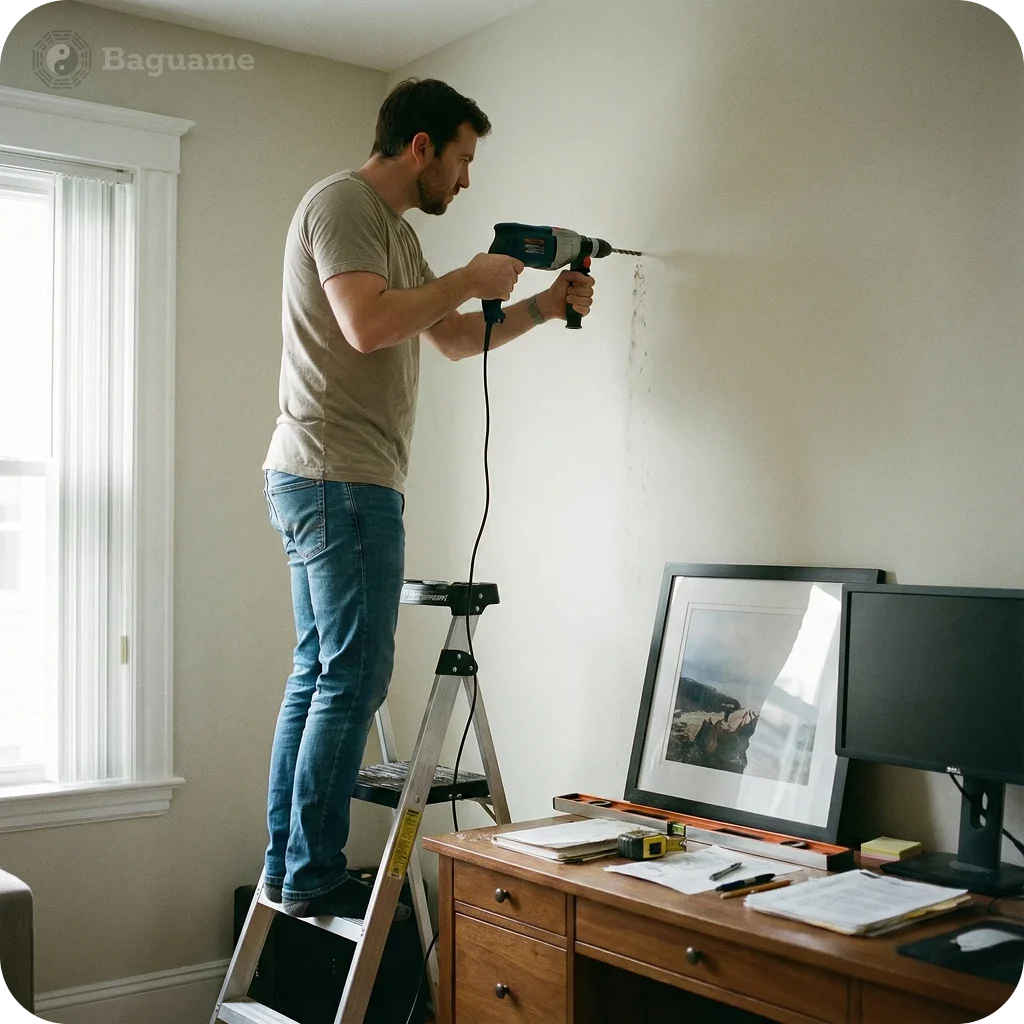
While sitting position is important, the absolute fastest way to trigger severe misfortune is to physically disturb the ground or walls in the Tai Sui sector.
Strictly Forbidden Activities in the Tai Sui Sector:
-
Breaking Ground: Digging holes in the garden for ponds, pools, or foundations.
-
Major Renovations: knocking down walls, drilling into floors, replacing heavy windows.
-
Loud Machinery: placing noisy generators or pumps in this area.
If you absolutely must renovate a large portion of your house that includes this sector, you must consult a professional to select a special Auspicous Date (Ze Ri) to begin work in a safe sector first, only approaching the Tai Sui area at a specific harmless time.
Practical Scenarios & Cures
Scenario A: Your Front Door faces Tai Sui
If your main door faces the Tai Sui direction, every time you open and close it, you are “disturbing” his energy.
-
The Cure: Keep this area immaculate. Ensure the door hinges are oiled and do not squeak. Avoid slamming the door. Do not renovate the entrance area this year.
Scenario B: Your Bedroom is in the Tai Sui sector
It is generally fine to sleep in this sector, as sleep is a quiet activity.
-
The Cure: Ensure your bed headboard is not positioned so that you are sleeping facing Tai Sui. The best position is to have your head pointing towards Tai Sui, so your feet point away, or simply sleep with your back to him if sitting up in bed.
Traditional Cure: The Pi Yao
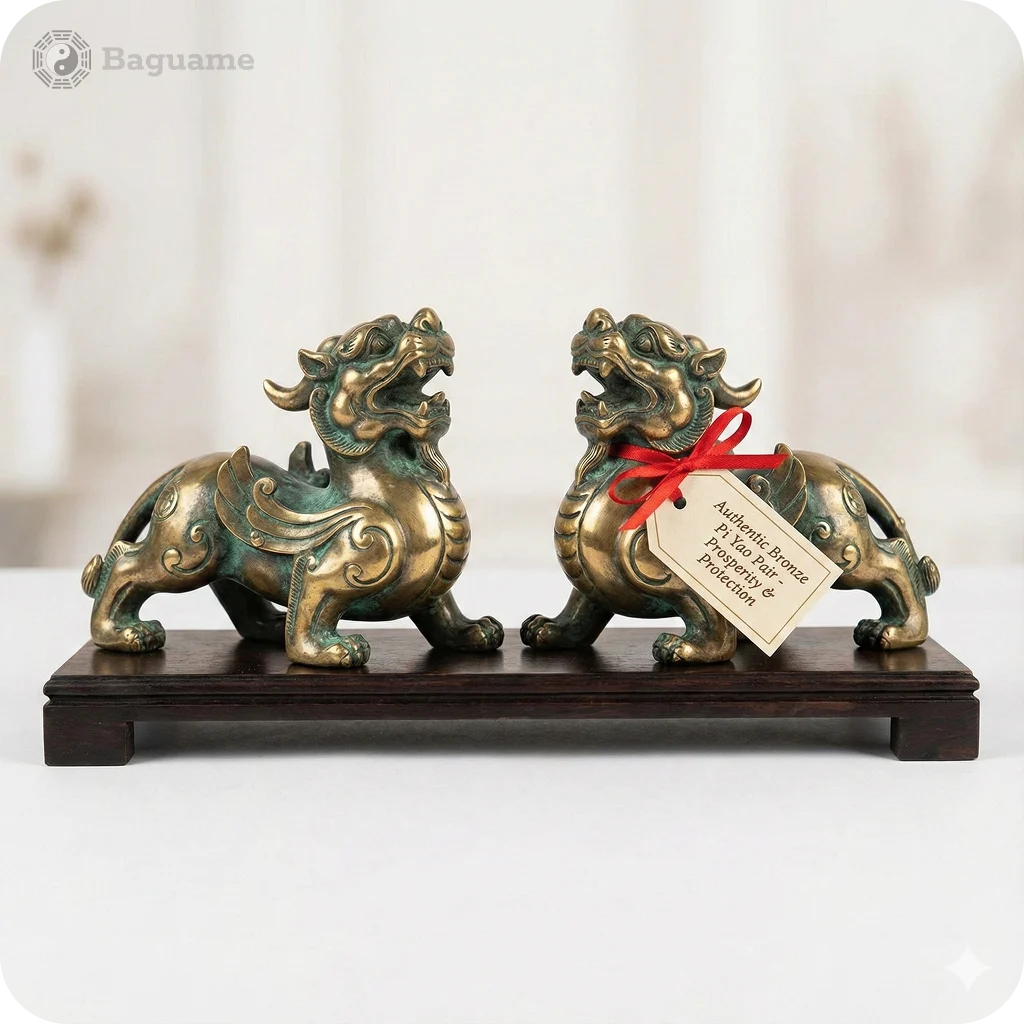
Dual Functionality: Wealth Magnet & Protector While its primary job here is to appease Tai Sui by confronting him on your behalf, the Pi Yao is also beloved across Asia as a powerful wealth activator. Legend has it that the Pi Yao has an insatiable appetite for gold and silver but possesses no excretory system. This symbolizes its unique ability to intake immense riches for its owner without ever letting them flow away.
Material & Placement Tips: When used specifically as a Tai Sui cure, metal versions (like brass or heavy bronze) are often highly recommended due to their “heavy,” authoritative energy that can withstand the Grand Duke’s pressure.
To maintain its potency, treat your Pi Yao with respect:
-
Never place it directly on the floor.
-
Avoid placing it in low-energy areas like bathrooms or kitchens.
-
Do not touch its eyes (used to seek wealth) or its mouth (used to grab wealth) unnecessarily.
Frequently Asked Questions About Tai Sui
This is the most common confusion. There are two types of Tai Sui clashes:
-
Spatial (Feng Shui): The physical sector in your home discussed in this article (e.g., the South sector in 2026). This affects everyone living in the house if disturbed.
-
Astrological (BaZi): If your personal Chinese Zodiac sign clashes with the current year’s sign (e.g., a Rat person in a Horse year). While related, this article focuses on the spatial affliction in your home. Even if your zodiac sign is lucky this year, digging in the physical Tai Sui sector of your house will still cause problems.
Generally, simple painting with a brush or roller is considered okay because it is quiet and surface-level. The prohibition against “breaking ground” or renovation specifically refers to actions that cause intense vibration or penetrate the structure: drilling holes, hammering nails, knocking down walls, or replacing flooring. If you are unsure, it is safest to postpone any work in that corner until next year.
No. Classical Feng Shui is flexible. The Pi Yao is the most popular cultural cure because it symbolizes loyal protection. However, the most effective “cure” for Tai Sui is actually a non-action: keep the area quiet. If you cannot use a Pi Yao, ensure you strictly follow the rules of not facing the sector and not making noise there. A silent sector is a safe sector.
This is actually considered good Feng Shui! Bathrooms are places where energy is flushed away. having Tai Sui in the bathroom is often interpreted as “flushing away the potential legal problems or obstacles” associated with the affliction. Just ensure you don’t decide to renovate the bathroom tiles this year.
Yes, it does. In an apartment context, “breaking ground” means disturbing the structure of your specific unit. Drilling into walls, changing floor tiles, or any noisy construction work within the Tai Sui sector of your apartment counts as disturbing the energy.