Walk into two offices of similar companies. One feels open, calm, and productive. People are focused, communication flows, deals close. The other feels heavy — cluttered desks, tense atmosphere, constant interruptions. The difference is rarely about strategy or talent. Often, it is about energy.
Classical Feng Shui is not decoration. It is a systematic framework — developed over centuries in China — for understanding how the orientation of space, the flow of Qi, and the placement of people and objects influence health, relationships, and wealth. When applied to an office environment, its effects are measurable: improved concentration, reduced conflict, and stronger financial flow.
In this article, we will walk through the core principles of office Feng Shui — from the entrance doormat to the placement of your team — and show how modern tools like the Baguame platform can help you apply these principles with precision.
“Qi gathers where it is welcomed — and scatters where chaos reigns.”
The human nervous system responds continuously to its surroundings. Clutter creates background cognitive load — our brains spend energy processing visual noise that could be used for thinking. Poor air circulation contributes to fatigue. The position of a desk relative to the door affects how safe or threatened we feel at an unconscious level.
In Feng Shui terms, all of these are expressions of Qi — the life force that moves through every space. When Qi flows freely and accumulates in the right places, people feel energized and lucky. When it stagnates or attacks, people feel drained, anxious, or stuck.
An office is particularly sensitive because many people spend more waking hours there than anywhere else. The cumulative effect of even subtle environmental stress — a sharp corner pointing at your chair, a mirror facing the entrance, a cluttered reception — compounds over months and years.

In classical Feng Shui, the main entrance — the Mouth of Qi — is the single most important point of any building. It is where energy first enters your space, and its quality sets the tone for everything that follows.Keep the entrance clear and welcomingRemove obstacles, broken items, and anything that blocks or slows the approach to the door. A narrow, cluttered hallway restricts Qi before it even enters.
Practical Tip
Avoid placing a large mirror directly facing the main entrance. It reflects incoming Qi back out of the building before it has a chance to circulate — a common and easily corrected mistake in many offices.
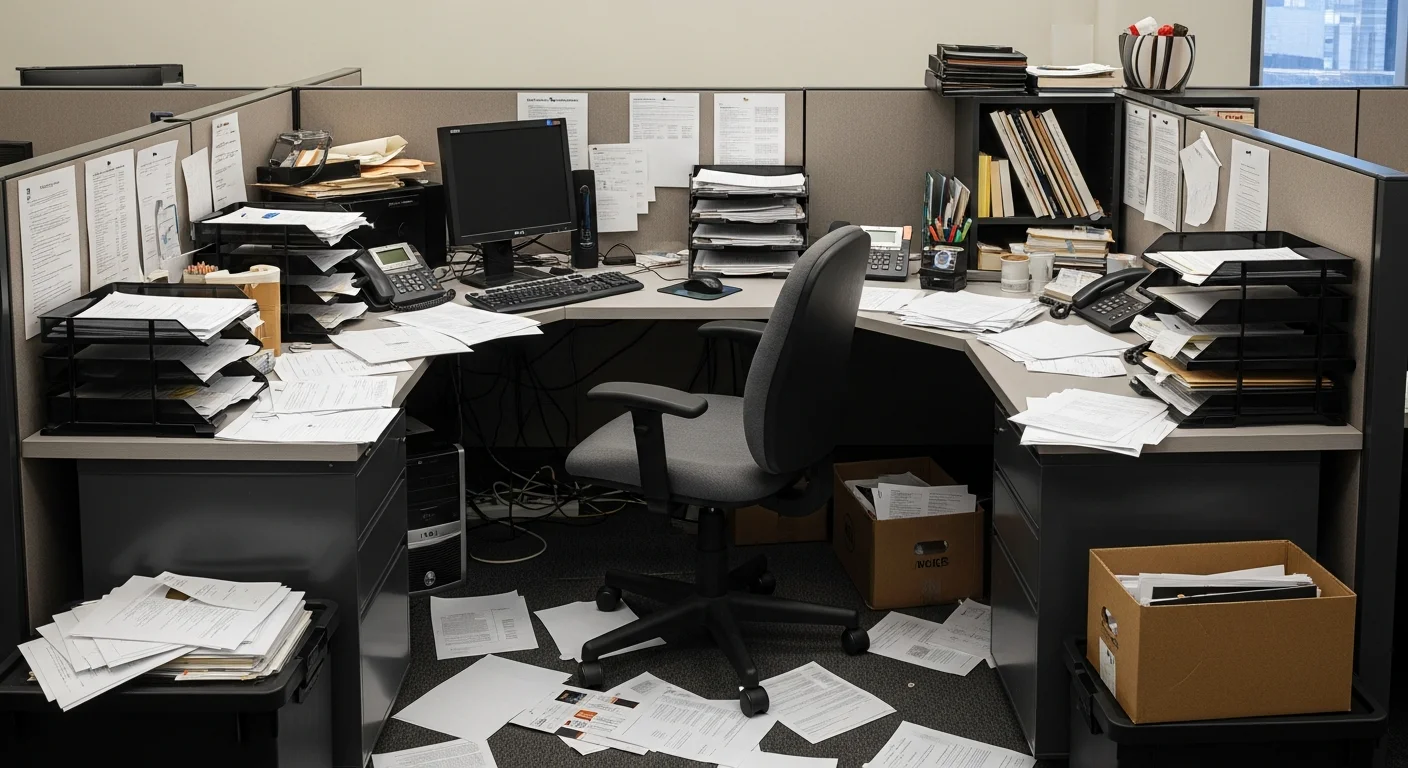
If there is one principle that unites every school of Feng Shui, it is this: clutter kills prosperity. Piles of unprocessed documents, broken equipment, overfull storage, and disorganized desks all create stagnant Qi — energy that cannot move, and therefore cannot bring change or growth.
Research in environmental psychology consistently confirms what Feng Shui practitioners have known for centuries: people in cluttered environments experience higher levels of cortisol, reduced focus, and greater decision fatigue. In a business context, this translates directly to missed opportunities, slower decision-making, and increased interpersonal friction.
The solution is systematic and non-negotiable: every desk, storage area, and common space should be organized so that only what is actively used remains visible. Archive completed projects. Repair or discard broken items immediately — broken objects carry Sha Qi, or attacking energy. Clear the space beneath desks and in corners, where stagnant energy tends to accumulate.
Using the Bagua map — the eight-sector energy grid of classical Feng Shui — you can overlay your office floor plan and assign specific intentions to each zone. Each sector governs a different area of life and business.
Here is a practical guide to the eight zones in an office context:
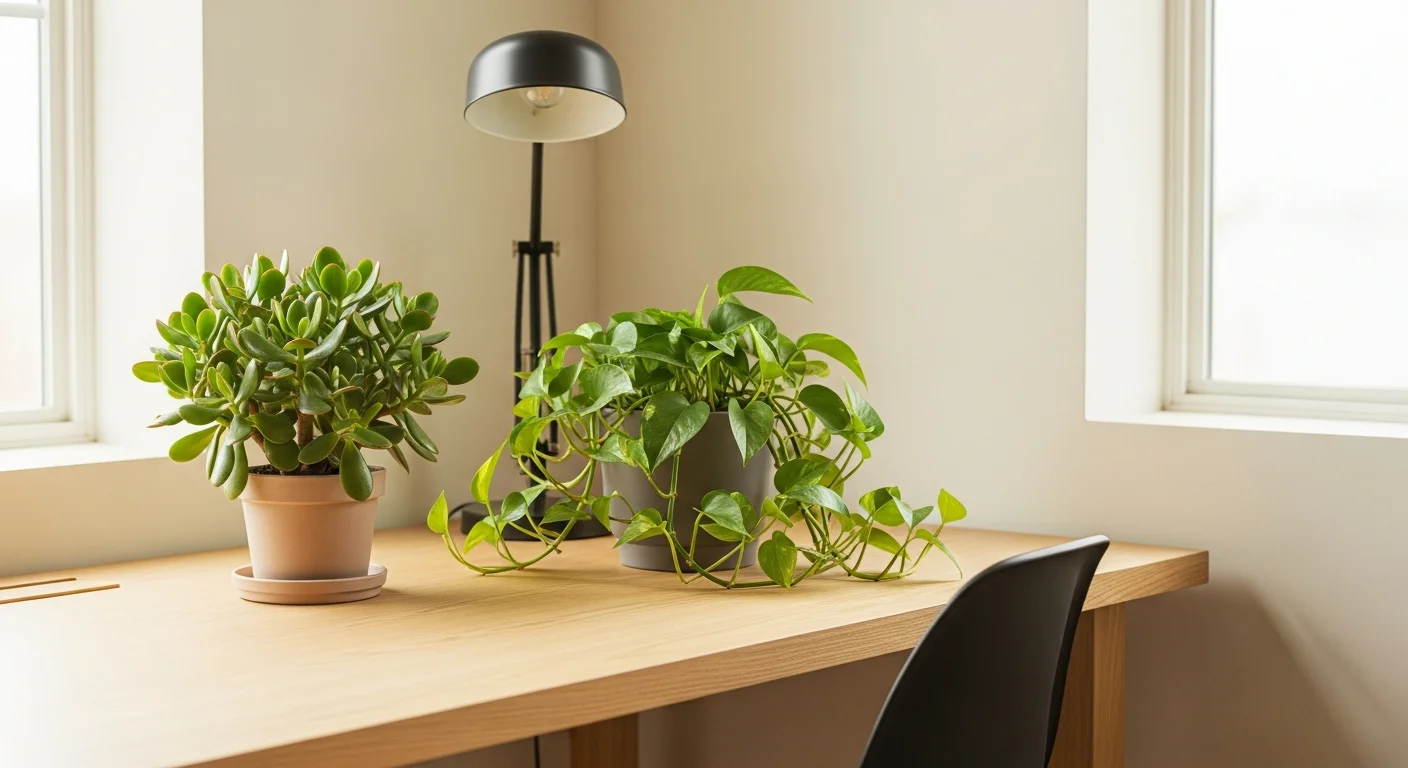
Living plants are among the most powerful and accessible Feng Shui tools available. They introduce upward Yang energy, purify air, and soften sharp corners (known as poison arrows). The most effective placements are the South-East wealth sector and the East growth sector.
Choose plants with rounded, lush leaves — pothos, jade plants, peace lilies, and rubber trees are excellent choices. Avoid cacti or plants with sharp, narrow leaves in shared workspaces, as they introduce Sha Qi. Critically: never keep dying or dead plants. A wilting plant in the wealth sector is far more damaging than having no plant at all.
Water is the classical symbol of wealth in Feng Shui. A small fountain, aquarium, or water feature placed near the entrance or in the North sector encourages the flow of financial opportunity into the business. The water must always be clean and moving — stagnant water reverses the effect entirely.
Placement matters significantly. In some houses and in certain years, the Flying Stars configuration will indicate that placing water in a specific sector activates the wealth star. In others, the same placement may energize an inauspicious star. This is precisely where calculation becomes essential.
Identify Your Office’s Wealth Sectors with Precision
The Baguame Annual Flying Stars calculator overlays the current year’s star chart onto your floor plan — showing you exactly which zones to activate and which to keep quiet in 2026
One of the most practically powerful applications of Feng Shui in an office setting is Ba Zhai, or the Eight Mansions method. This system calculates an individual’s personal Kua number based on their birth year and gender, and identifies their four favorable and four unfavorable directions.
What this means in practice: each person on your team has specific directions they should face while working, and specific sectors of the building where they will naturally perform better. A salesperson sitting in their Sheng Qi (life-generating) direction will close more deals — not through mysticism, but because the alignment between personal energy and spatial energy reduces friction and amplifies flow.
The Baguame Ba Zhai calculator automates this process. Upload your office floor plan, input your team’s birth data, and the platform generates a visual overlay showing the optimal seating positions for each person — based on classical Eight Mansions calculations. For management, prioritize placing key decision-makers in their Fu Wei (stability) or Sheng Qi (success) sectors. For sales and client-facing roles, the Sheng Qi direction is paramount.
Key Principle
Even in an open-plan office, the direction a person faces — not just where their desk is located — significantly influences their personal Feng Shui. Rotating a desk 90 degrees can shift someone from a challenging direction to an auspicious one without moving any furniture.
Classical Flying Stars (Xuan Kong Fei Xing) is a time-based system that tracks how nine energy stars move through the nine sectors of any building on an annual, monthly, and even daily cycle. Each year, the star configuration shifts — meaning that a sector that was prosperous last year may carry challenging energy this year, and vice versa.
For business owners, the most important annual stars are:
The Baguame Annual Flying Stars calculator and Zones of Afflictions tool calculate all of these positions automatically for the current year and overlay them directly onto your uploaded floor plan. You see at a glance which meeting room to use for important negotiations, where to place your most productive team members, and which corner to keep deliberately quiet.
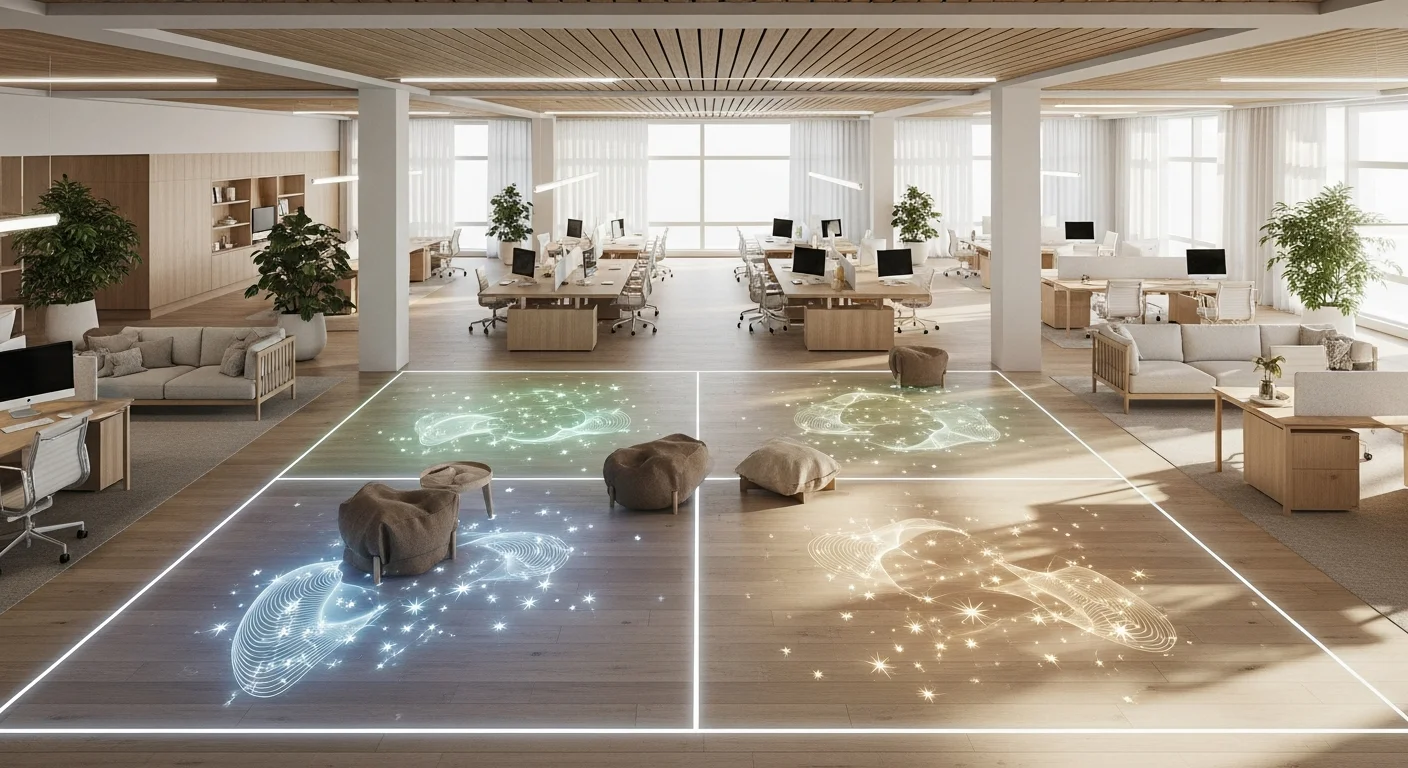
Beyond annual changes, every building has a permanent energy signature determined by its facing direction and the period in which it was built or last renovated. This is the natal chart of the house — a combination of Water Star, Mountain Star, and Period Star in each sector that never changes.
For an office building, the natal chart reveals:
Understanding the natal chart allows you to make strategic decisions about office layout that transcend any single year. Positioning the CEO’s office, the main conference room, or the sales floor in sectors with strong natal chart support creates a compounding advantage over time.
The Baguame Natal Chart Map generates the complete flying star natal chart for your building based on its compass orientation and construction period — and overlays it interactively on your floor plan, with full sector-by-sector analysis available at a click.
Analyze Your Office’s Natal Chart
Upload your floor plan, mark North, and let Baguame generate your building’s complete energy profile — combining natal chart, annual stars, and personal directions in one interactive map
Before investing in a full Feng Shui analysis, use this checklist to address the most common and impactful issues:
The most successful application of Feng Shui in business is not about decorative objects or cultural symbolism. It is about understanding that the space we inhabit shapes the energy we carry — and that energy, in turn, shapes our decisions, relationships, and outcomes.
A well-configured office reduces friction, supports focus, and creates an environment where prosperity can genuinely accumulate. This is not mysticism — it is a systematic, evidence-based approach to optimizing one of the most underutilized assets in any business: the physical space itself.
The tools available through Baguame — from the Ba Zhai team placement calculator to the Annual Flying Stars overlay and Natal Chart analysis — bring the precision of classical Feng Shui into a modern, accessible format. Whether you are setting up a new office, relocating your team, or trying to understand why a space that looks right still feels wrong, the answer is often found in the numbers.