
Full Guide to Classical Feng Shui: Principles, Schools, and Application
Introduction
Have you ever walked into a home and immediately felt a sense of calm and clarity, while in other spaces, you felt inexplicably drained or restless?
In fact, this isn’t a coincidence. Rather, it is the interaction between your personal energy and the energy of your environment. This is the essence of Feng Shui.
Translated literally, Feng Shui (pronounced fung shway) means “Wind and Water.” Historically, this phrase originates from the ancient Burial Book (Zang Shu), which states: “Qi rides the wind and scatters, but is retained when encountering water.” Consequently, it was not merely about interior design; it was a strategic discipline used by emperors to site palaces, cities, and tombs to ensure longevity, power, and prosperity.
However, in the modern world, Feng Shui is often misunderstood. For instance, if you search online, you will find endless articles about “lucky bamboo,” “money frogs,” or painting your front door red to get rich.This is often referred to as “Pop Feng Shui” or “New Age Feng Shui”—simplified interpretations that focus on psychology and symbolism rather than energy mechanics.
Classical Feng Shui is different. Specifically, it is a sophisticated metaphysical science that analyzes how Qi (energy) flows through your environment based on:
- Time (When was the building constructed?)
- Direction (What is the precise magnetic orientation of the property?)
- Form (What is the physical landscape surrounding you?)
In this ultimate guide, we will move beyond the myths. Furthermore, we will explore the foundational principles of Classical Feng Shui, including the Five Elements, Yin and Yang, and advanced systems like Flying Stars and Eight Mansions. Ultimately, by the end of this article, you will understand not just what to place in your home, but where and why—turning your living space into a powerful tool for supporting your health, wealth, and relationships.
The Core Foundations of Metaphysics
Before analyzing a floor plan or taking a compass reading, it is essential to understand the “physics” of Feng Shui. In essence, Classical Feng Shui relies on three immutable laws that govern the universe and, by extension, your home.
1. Qi: The Breath of Life
At the heart of Feng Shui is Qi (pronounced chee). Qi is the invisible life force or energy that permeates everything—mountains, rivers, buildings, and humans. Therefore, in your home, the goal is not just to “have” energy, but to curate the quality and flow of that energy.
-
Sheng Qi (Vibrant Energy): This is the goal. It is meandering, slow-moving, and nourishing. As a result, it brings opportunities, health, and vitality.
-
Sha Qi (Killing Energy): This is harmful energy. It is often caused by sharp structures, rushing straight lines (like a long straight corridor), or stagnation (clutter and darkness).
Consequently, it creates stress, accidents, and blockages.
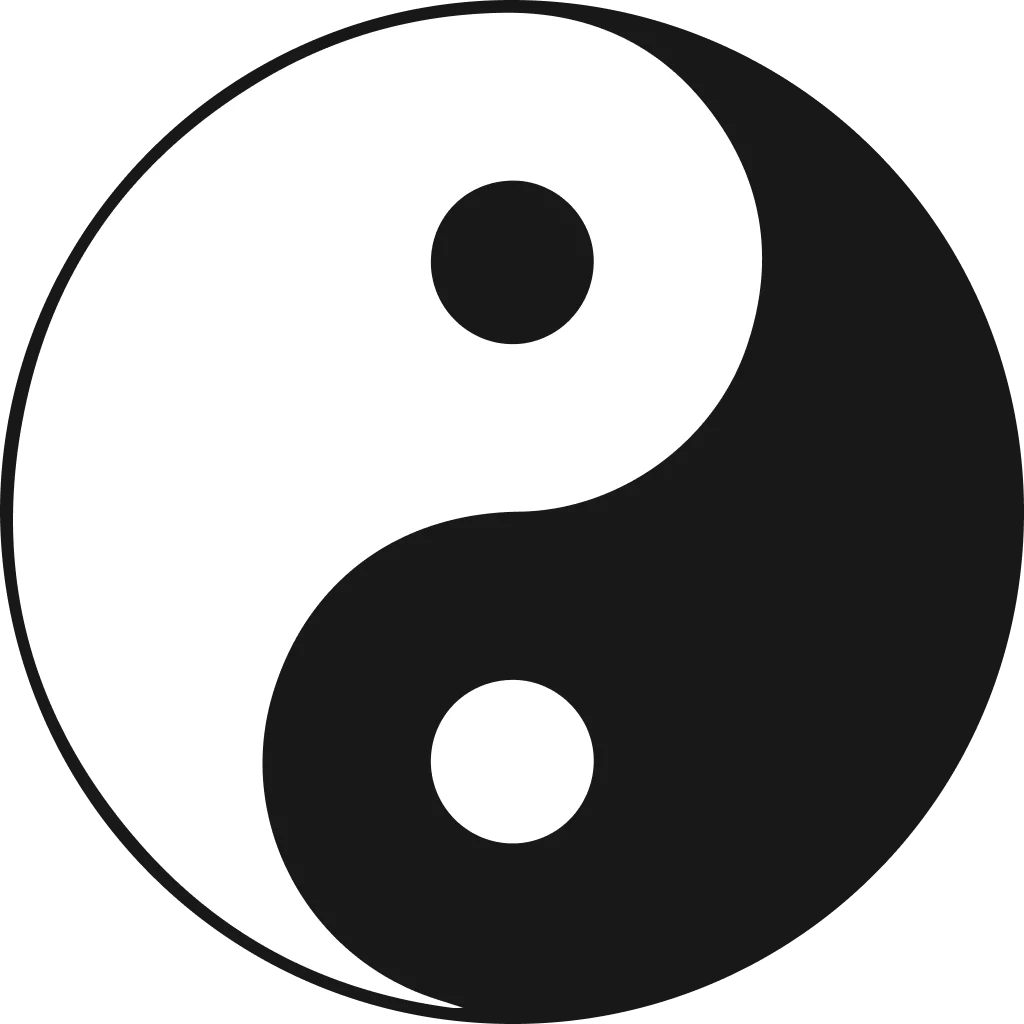
2. Yin and Yang: The Law of Balance
The concept of Yin and Yang describes the duality of the universe. Basically, nothing is purely one or the other; they exist in relation to each other.
- Yang is active, bright, loud, moving, and warm.
- Yin is passive, dark, quiet, still, and cool.
Application in the Home: A home requires a dynamic balance.
- Yang Areas: Living rooms, kitchens, and home offices should be Yang (active) to stimulate social interaction and productivity.
- Yin Areas: Bedrooms and storage rooms should be Yin (calm) to promote rest and recovery.
- Imbalance: For example, a bedroom that is too Yang (bright lights, TV noise) leads to insomnia. Conversely, a living room that is too Yin (dark, cluttered) leads to lethargy and depression.
3. Wu Xing: The Five Elements
While Yin and Yang describe the state of energy, the Five Elements describe the transformation of energy. Thus, this is the most critical tool for applying Feng Shui “cures.” The five elements are Wood, Fire, Earth, Metal, and Water.
Importantly, they do not just represent physical materials; they represent phases of energy. In Feng Shui analysis (especially Flying Stars), we use the interaction between these elements to enhance good luck or neutralize bad luck. They interact in two main cycles:

The Main Schools of Feng Shui: Form vs. Compass
It is important to note that Classical Feng Shui is not a singular method; it is a convergence of several methodologies. While there are many sub-systems, they generally fall into two primary schools of thought: the Form School and the Compass School. However, a comprehensive analysis always utilizes both.
1. The Form School (Luan Tou)
This is the oldest form of Feng Shui, dating back thousands of years. It focuses entirely on the physical environment—what you can see with your naked eye. Therefore, before looking at a compass, a master looks at the landscape.
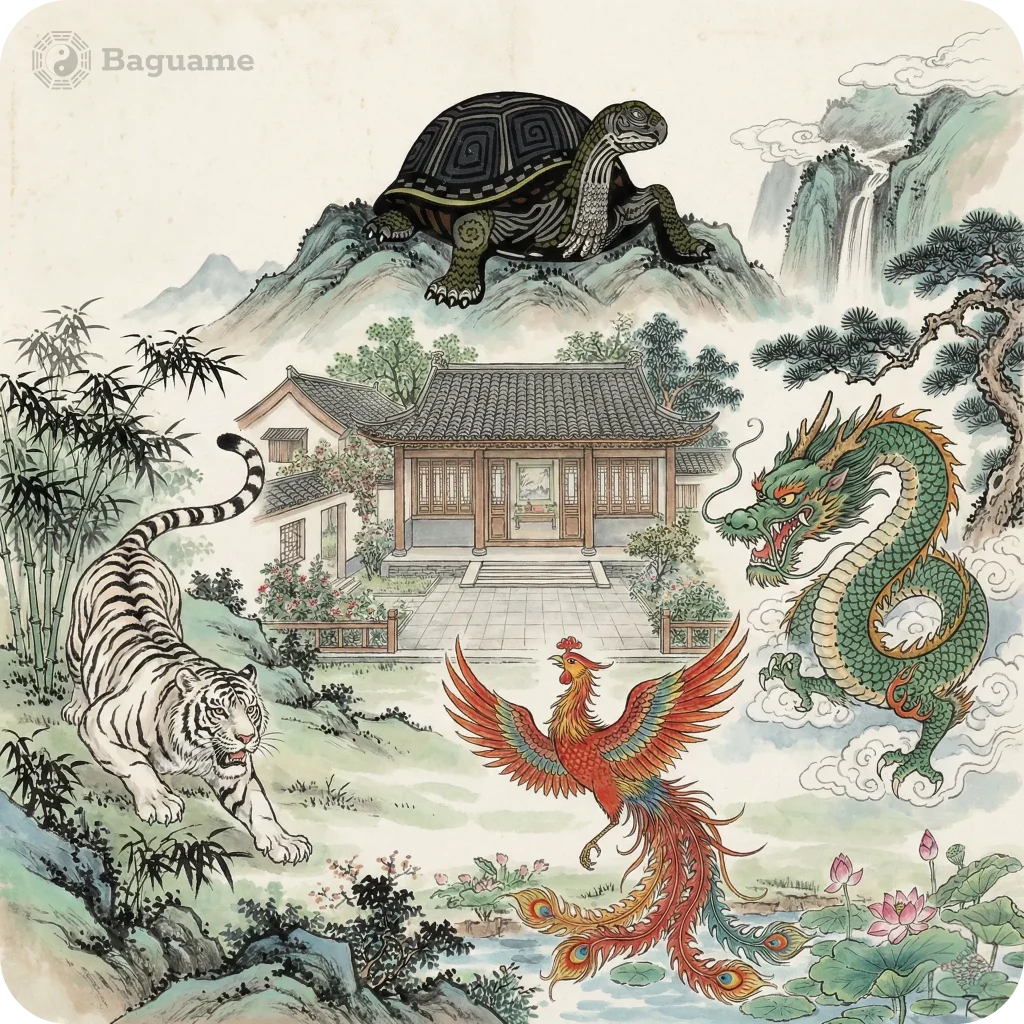
External Forms: The external environment accounts for approximately 70% of a property’s Feng Shui potential.
-
The Landscape: Are there mountains behind the house for support?
Additionally, is there water (or a road acting as virtual water) in front to collect Qi? -
The Four Celestial Animals: Ideally, a home sits in an “armchair” formation:
-
Black Tortoise (Back): High ground or a tall building behind for support and stability.
-
Green Dragon (Left) &
White Tiger (Right): Hills or buildings on the sides to embrace and protect the Qi. -
Red Phoenix (Front): An open space in front (the “Bright Hall”) to allow Qi to gather and settle.
-
-
Poison Arrows (Sha Qi): Form school also identifies threats, such as a sharp roof angle from a neighbor pointing at your window, or a T-junction road rushing directly at your front door.
Internal Forms: Furthermore, this applies to the interior layout.
For example, sleeping under a heavy beam (suppressive energy) or having the front door aligned directly with the back door (energy rushes through without stopping) are Form School concerns.
2. The Compass School (Li Qi)
While Form School deals with the visible, Compass School deals with the invisible.
Specifically, it uses complex formulas based on magnetic directions and time to calculate the quality of energy in specific sectors of the home.
This school relies heavily on the Luo Pan (Feng Shui compass) to obtain precise readings.
Even a deviation of a few degrees can change a “Wealth” chart into a “Disaster” chart.
In particular, Compass School includes the most popular advanced systems:
-
Eight Mansions (Ba Zhai): Matches the house’s directions to the individual’s birth date (Gua Number).
-
Flying Stars (Xuan Kong): A dynamic system that introduces the dimension of time, tracking how energy shifts in 20-year cycles and annual cycles.

The Synergy
There is a famous saying in Feng Shui: “Form determines the potential;
Compass determines the outcome.” Consequently, you cannot rely on formulas alone. If you have a perfect Flying Star chart but your house is located next to a noisy highway or a high-voltage tower (Bad Form), the auspicious stars cannot be activated effectively. Conversely, a house with beautiful surroundings needs the Compass formulas to unlock its full potential.
Essential Tools for Analysis
To practice Classical Feng Shui, intuition is not enough. You need precise instruments to map the invisible energy blueprint of your home. There are two primary tools every practitioner uses: the Compass (Luo Pan) and the Energy Map (Bagua).
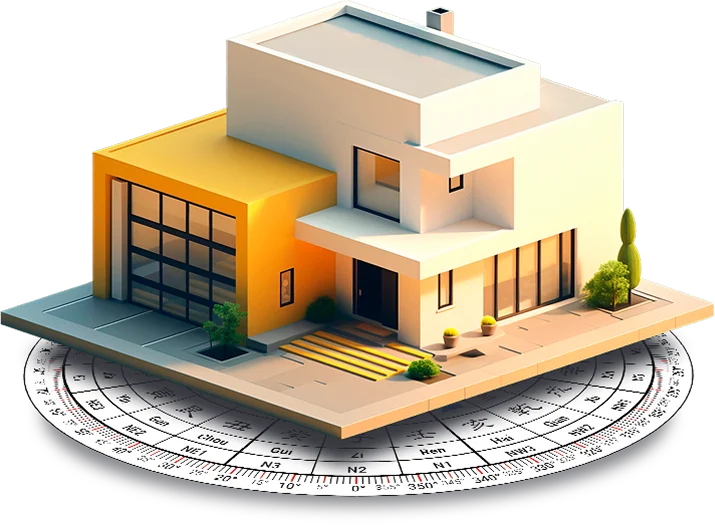
1. The Luo Pan (Compass)
While a hiker’s compass tells you where North is, a Feng Shui compass—known as a Luo Pan—tells you the quality of energy coming from that direction.
A traditional Luo Pan is a complex instrument containing concentric rings of data, linking directions to the Five Elements, Hexagrams, and time cycles.
-
Why Precision Matters: In Classical Feng Shui, “South” is not just a single direction.
In fact, the 360° circle is divided into 24 Mountains (sub-directions), each spanning 15 degrees. -
The Risk of Error: A reading of 157° (South 1) might have completely different energy than 158° (South 2) depending on the system used.
Unfortunately, a standard phone compass is often inaccurate due to magnetic interference from electronics.
2. The Bagua Map & Lo Shu Square
The Bagua (literally “Eight Areas”) is the energy map used to analyze a floor plan.
However, there is a major point of confusion for beginners: the difference between Western and Classical Bagua.
-
Western Bagua (The “Black Hat” Style): This simplified method aligns the map solely based on the front door.
For example, it assumes the “Wealth Corner” is always in the far left, regardless of whether that corner faces North, South, East, or West. -
Classical Bagua (Compass Style): This authentic method aligns the map with actual magnetic directions.
Moreover, it acknowledges that the energy of the South (Fire) is different from the North (Water).
In this system, your Wealth sector changes based on your home’s unique orientation and construction date.
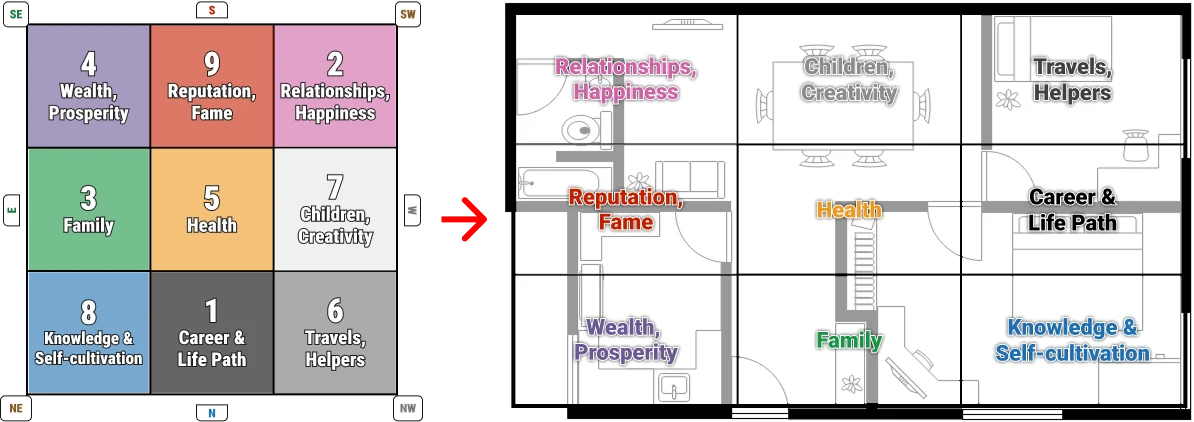 The Lo Shu Square: To apply the Bagua to your floor plan, Classical practitioners often use the Lo Shu Square (a 3×3 grid) or a pie-chart overlay.
This grid divides your house into 8 sectors (North, NE, East, SE, South, SW, West, NW) and a Central Palace.
-
How to use it: You must overlay this grid over your floor plan, aligning the center of the grid with the center of your house (The Tai Chi).
Save Time: Manually drawing a grid and measuring angles on a blueprint can be tedious and prone to error.
Instead, use our Lo Shu Calculator: simply upload your floor plan, and the system will automatically overlay the correct sector grid tailored to your home’s alignment.
Personal Feng Shui: The Eight Mansions (Ba Zhai)
Have you ever noticed that you sleep deeply in one room but toss and turn in another?
Or that you work efficiently at the office but struggle to focus at your home desk?
Surprisingly, this is often due to Ba Zhai (Eight Mansions) Feng Shui.
Unlike Form School, which looks at the environment, Eight Mansions looks at you.
Basically, it operates on the principle that each person has a unique energy signature based on their date of birth and gender.
The Gua Number (Life Kua)
The foundation of this system is your Gua Number (ranging from 1 to 9).
This number determines your energetic compatibility with the eight magnetic directions.
Based on your Gua Number, you fall into one of two distinct groups:
-
The East Group (Gua 1, 3, 4, 9)
-
The West Group (Gua 2, 6, 7, 8)
Note: Gua 5 is a special case; males convert to Gua 2, and females convert to Gua 8.
The Four Auspicious Directions
For every individual, there are four favorable directions that support specific aspects of life.
Therefore, to tap into this energy, you should try to face these directions while working or sleep with your head pointing towards them.
-
Sheng Qi (Life Generating): The strongest direction.
Best for wealth, career success, and vitality. Ideally, your front door should face this direction. -
Tian Yi (Heavenly Doctor): The direction for healing and health.
Great for the bedroom, especially for those recovering from illness. -
Yan Nian (Longevity): Governs relationships, love, and networking.
Good for a master bedroom to promote harmony in marriage. -
Fu Wei (Stability): The direction for personal growth, meditation, and study.
Excellent for students or a home office.
The Four Inauspicious Directions
Conversely, there are four directions that drain your energy.
-
Huo Hai (Mishaps): Minor accidents and hassles.
-
Wu Gui (Five Ghosts): Misunderstandings, gossip, and fire hazards.
-
Liu Sha (Six Killings): Legal issues and illness.
-
Jue Ming (Total Loss): The most dangerous direction.
Avoid facing this direction at all costs, especially for your main door or bed headboard.
How to Apply It
The rule of thumb is simple: Sit facing your good directions, sleep pointing to your good directions. If you are an East Group person living in a house that faces a West Group direction, you might feel unsupported.
However, you can mitigate this by ensuring your bed and desk are aligned correctly within your specific room.
Find Your Directions Now: Calculating your Gua number manually can be tricky depending on the lunar calendar.
Instead, use our free Kua Number Calculator to instantly discover your group and get your best directions.
Time and Space: The Flying Stars (Xuan Kong)
If Eight Mansions is about direction, Flying Stars (Xuan Kong Fei Xing) is about time. In fact, this is widely considered the most potent and effective system in Classical Feng Shui.
Many people ask: “Why did I have great luck in this house for five years, and then suddenly everything went wrong?”
Often, the answer lies in the Flying Stars. Energy is not static; it is dynamic.
As time changes, the quality of Qi in your home shifts.
The Concept of Periods
Flying Star Feng Shui divides time into 20-year cycles known as “Periods.”
-
Period 8: 2004 – 2023
-
Period 9: 2024 – 2043 (Current Period)
A house built (or significantly renovated) in Period 8 has a completely different energy chart than a house built in Period 9. When we entered Period 9 in February 2024, the energy of the world shifted. For example, stars that were previously lucky (like Star #8) are beginning to fade, while the Star #9 (Fire) has become the ruler of wealth and celebration.
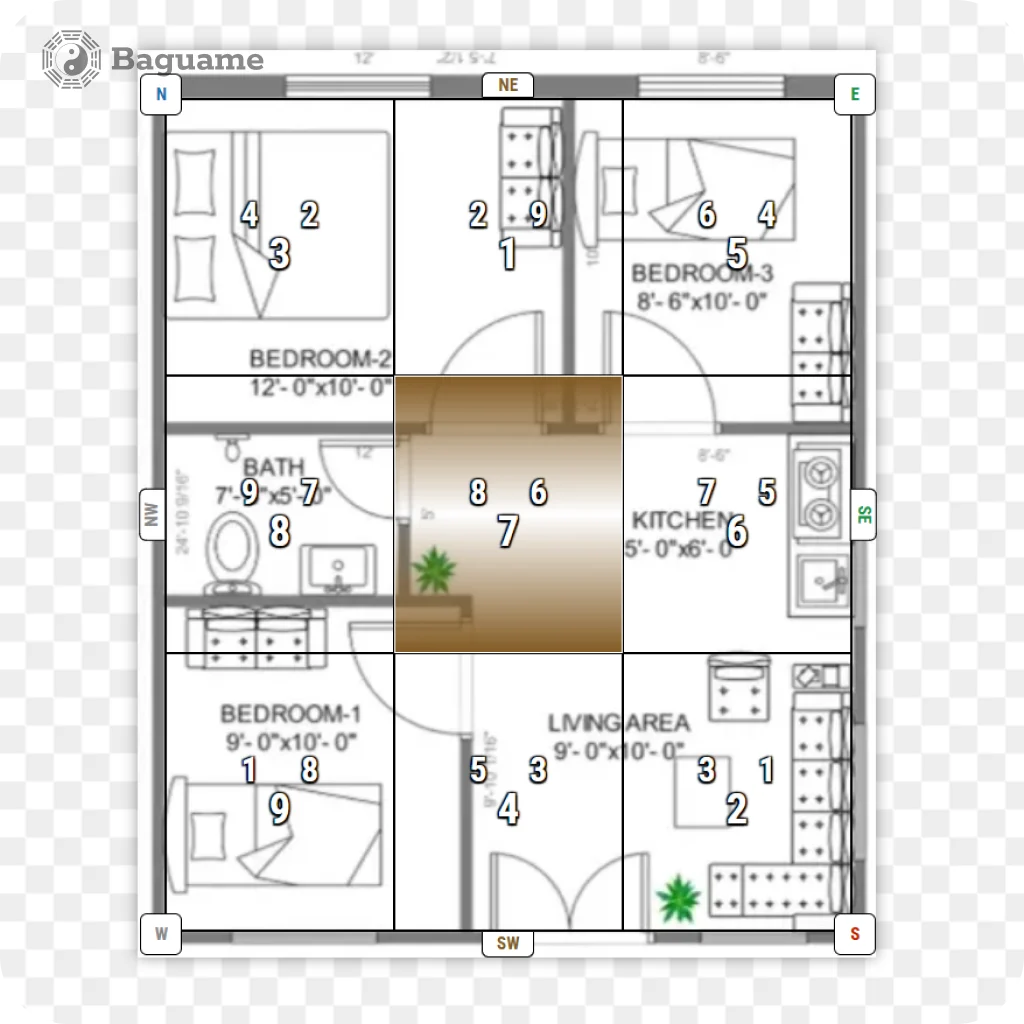
The Natal Chart: Your Home’s DNA
Every house has a permanent energy map called a Natal Chart.
To calculate this, you need two pieces of data:
-
The Construction Date: Determines the Period.
-
The Precise Facing Direction: Measured with a Luo Pan.
This chart places three numbers (Stars) in each of the 9 sectors of your home.
Crucially, the interaction between these numbers determines the fortune of that specific room.
💰
1. The Water Star
(Facing Star) – Wealth
This star governs prosperity, career, and financial flow.
Therefore, it is activated by movement, open space (“Bright Hall”), and water features.
Thus, if your front door or a large window is located in a sector with a timely Water Star (like #9 or #1), your house naturally supports wealth.
❤️
2. The Mountain Star
(Sitting Star) – Health & People
This star governs health, relationships, and fertility.
In contrast, it is activated by stillness, solid walls, and heavy furniture.
You want a good Mountain Star in your bedroom to ensure good health and restful sleep.
📅
3. The Annual Stars
(Visiting Energy)
On top of the permanent Natal Chart, there are Annual Stars that fly into each sector every year.
These act as triggers.
-
The Good: If the Annual Wealth Star (#9) flies into your front door sector, expect a boost in income that year.
-
The Bad: If the dreaded Yellow 5 (Misfortune Star) or Black 2 (Sickness Star) flies into your bedroom, you must apply cures (usually Metal element) to neutralize it.
Reading the Numbers
You don’t need to be a mathematician, but you do need to know which stars are currently lucky.
-
Auspicious Stars in Period 9: #9 (Future Wealth/Celebration), #1 (Wisdom/Noble People), #2 (Becoming timely – Land/Assets).
-
Affliction Stars: #5 (Disaster), #7 (Robbery/Betrayal), #3 (Conflict/Arguments).
Practical Feng Shui Room by Room
Once you understand the abstract principles of Qi and the Five Elements, the next step is application.
While advanced Flying Star charts require precise calculations, “Form School” principles can be applied immediately to improve the flow of energy in any home.
Below is a room-by-room guide to optimizing your space.
1. The Main Door: The Mouth of Qi
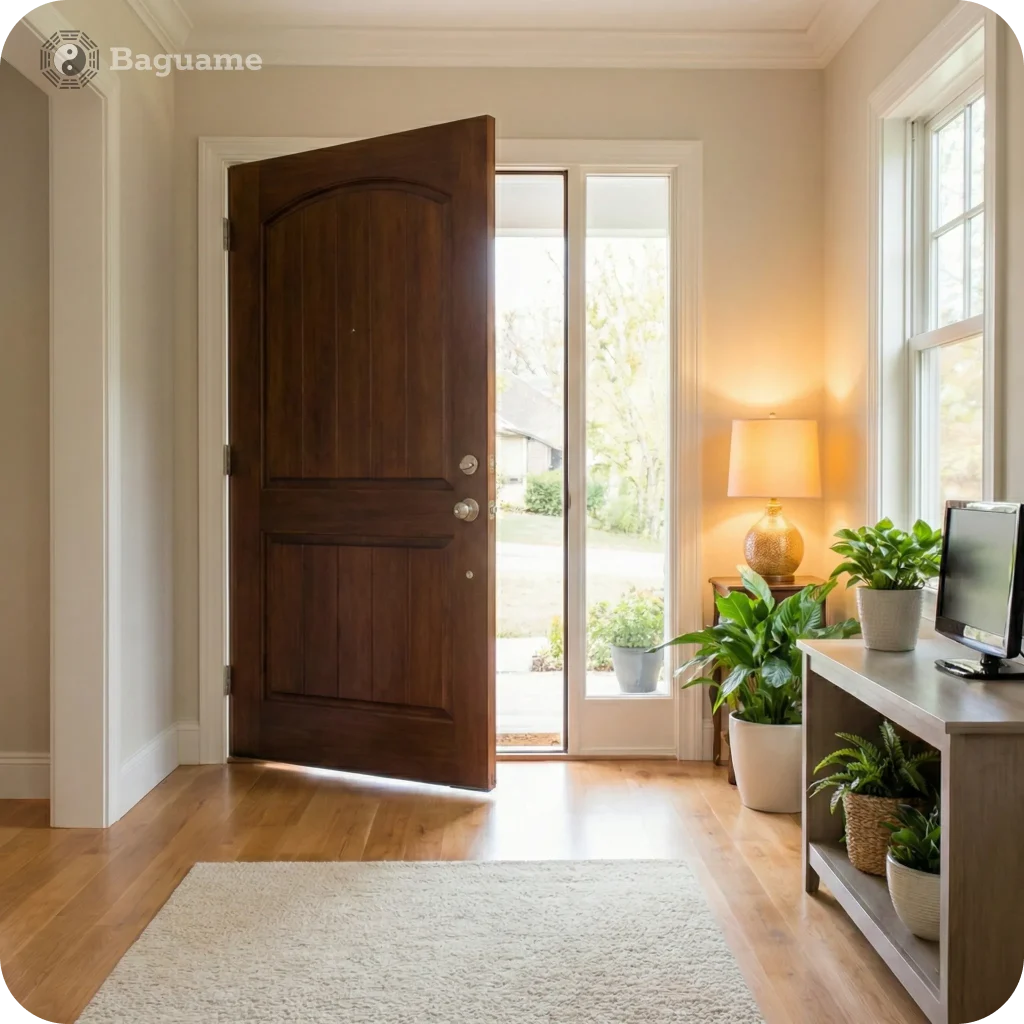
The front door is the most critical area of your home.
In Feng Shui, it is called the “Mouth of Qi” because this is where energy enters your house.
Consequently, if the mouth is blocked, the body cannot be nourished.
-
Clear the Clutter: Avoid leaving shoes, umbrellas, or boxes behind or around the door.
The door should open fully—to 90 degrees. If it hits something behind it, your opportunities in life will be similarly restricted. -
Bright and Welcoming: The entry hall (Ming Tang) should be well-lit.
A dark entrance creates “Yin” (stagnant) energy. Therefore, if natural light is lacking, use a warm, bright lamp. -
Line of Sight: Avoid having the front door align directly with a back window or back door.
This creates a straight path for Qi to rush in and immediately rush out, meaning wealth enters but doesn’t stay.
However, you can remedy this by placing a plant or screen to slow the energy flow.
2. The Bedroom: Sanctuary for Restoration
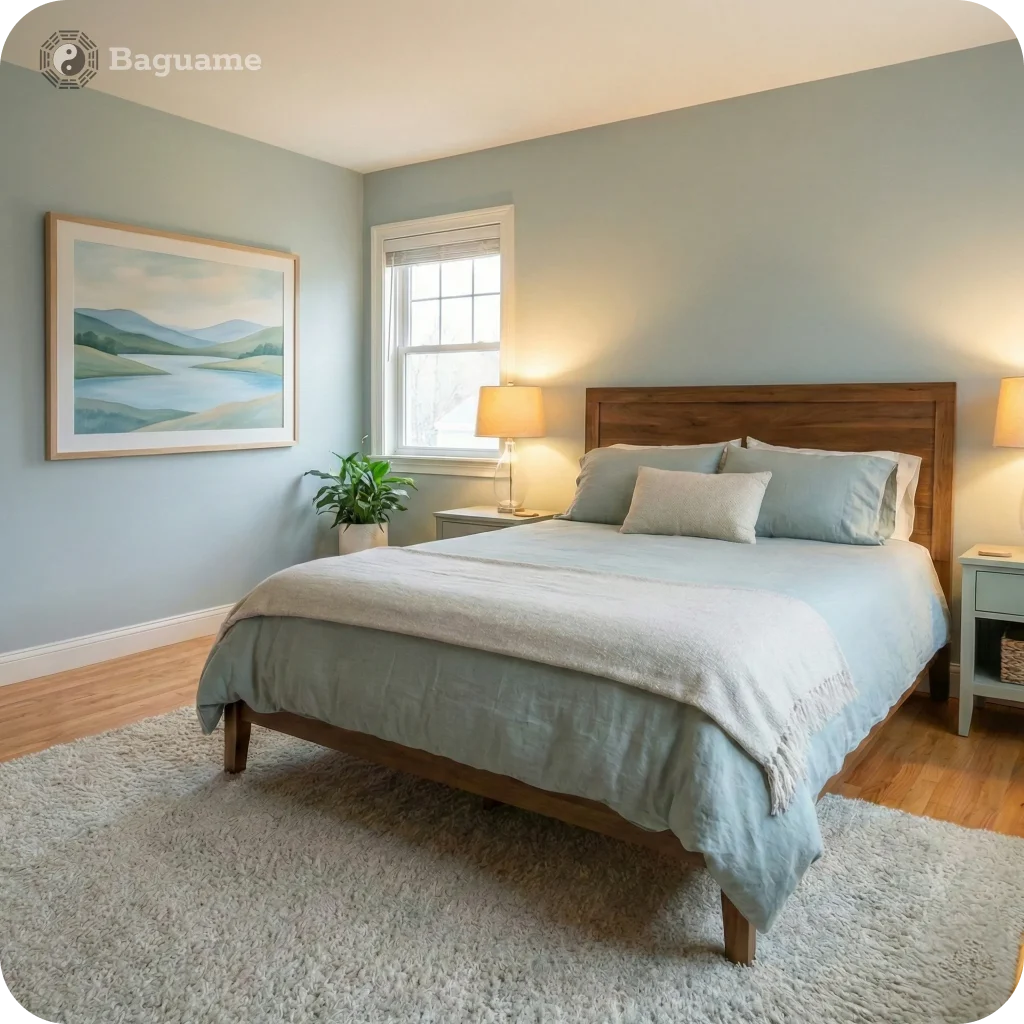
We spend a third of our lives sleeping.
The bedroom governs health and relationship harmony. Thus, it should be a Yin (quiet) space.
-
The Command Position: Place your bed so that you can see the door, but are not directly in line with it (the “coffin position”).
This places you in command of your space and reduces subconscious anxiety. -
Solid Support: Your headboard should be solid (not bars) and placed against a solid wall.
Additionally, avoid placing the head of the bed under a window, as this lacks support and dissipates Qi during sleep. -
Mirrors: Avoid large mirrors facing the bed.
Mirrors are active (Yang) and reflect movement. As a result, seeing your reflection while trying to sleep can startle the subconscious and lead to restlessness or insomnia.
3. The Kitchen: The Treasury
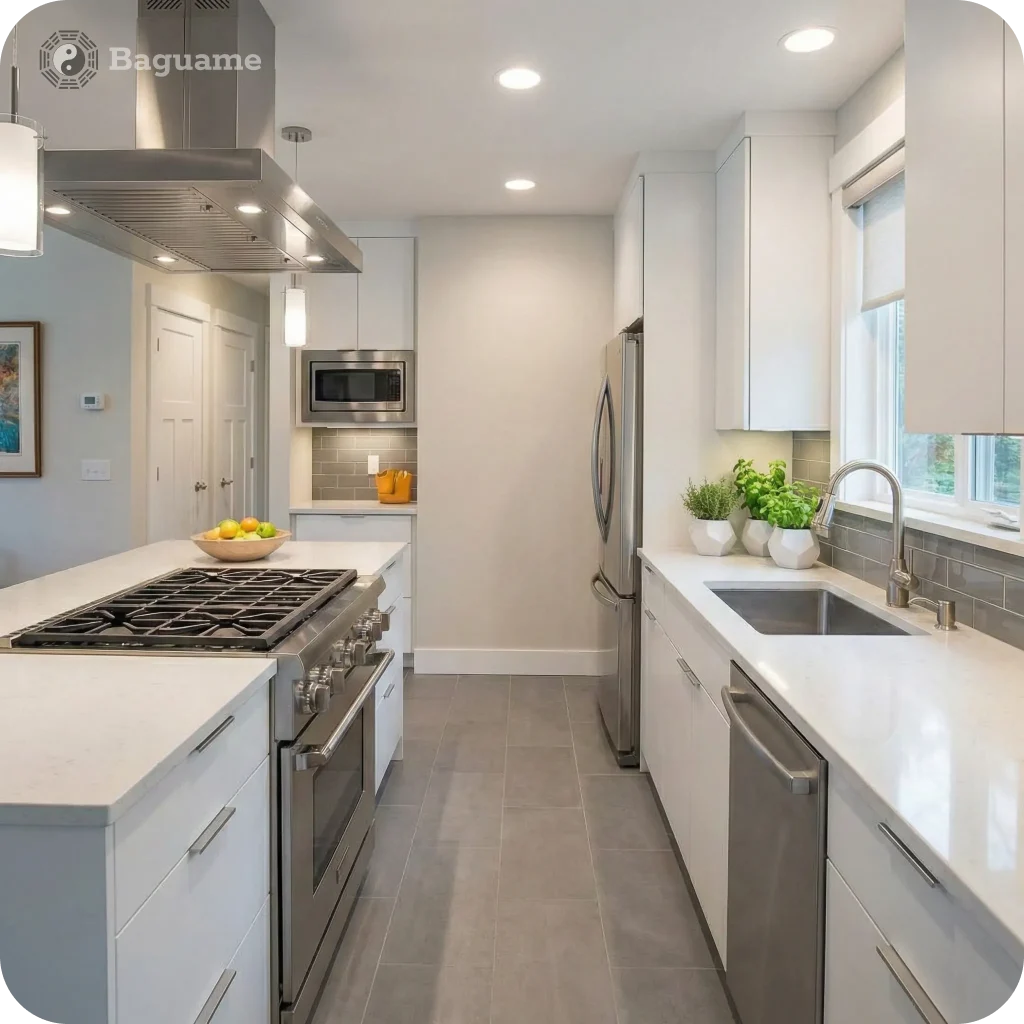
In ancient China, food was wealth.
Therefore, the kitchen—specifically the stove—represents your capacity to generate and hold onto wealth.
-
Stove Position: The stove should be in a commanding position where the cook is not surprised by someone entering.
For example, if your back is to the entrance while cooking, place a small reflective surface (like a kettle or mirror) to see behind you. -
Fire and Water Clash: The stove (Fire) and the sink/fridge (Water) should not be placed directly opposite each other or right next to each other.
This creates a clash of elements, which can lead to family arguments.
However, a wooden element (like a green rug or wooden cutting board) placed between them can bridge this clash.
4. The Home Office: Productivity and Focus
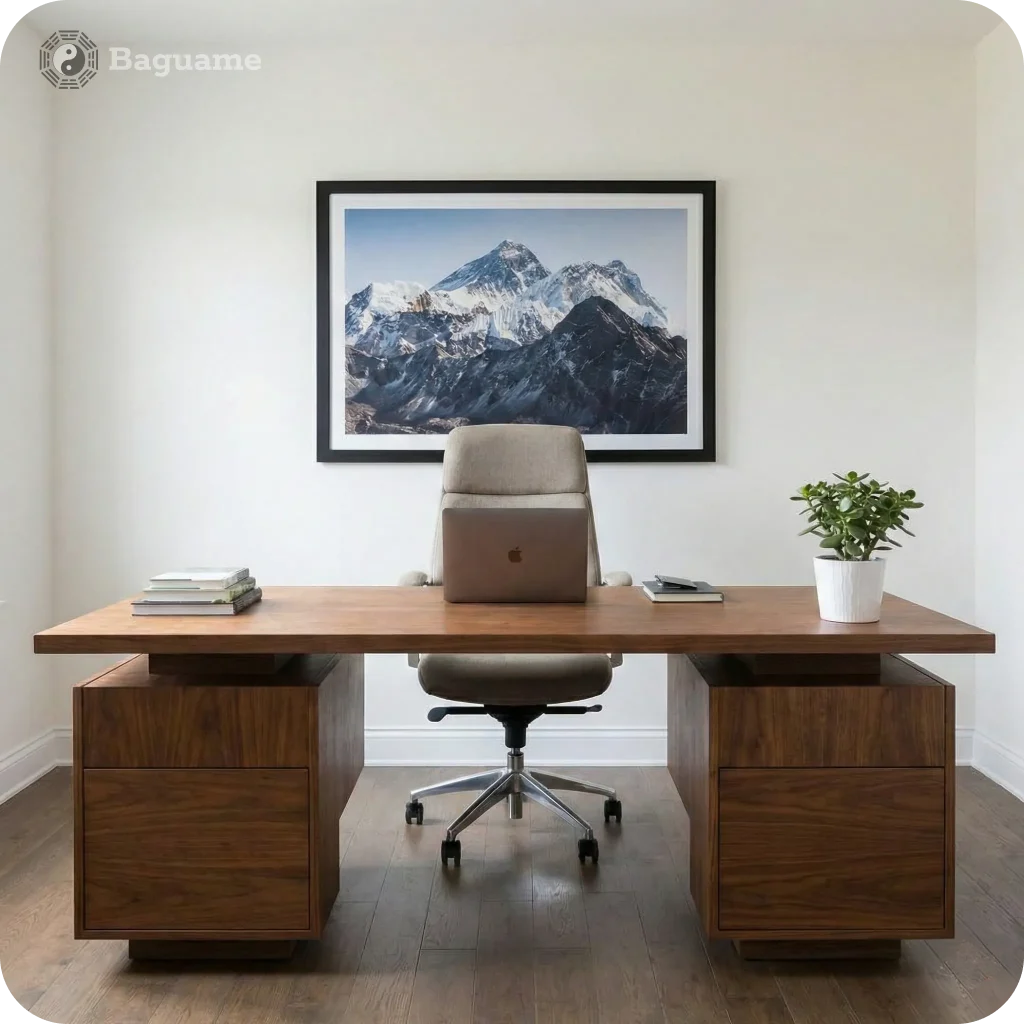
Whether you work from home or just pay bills, this space governs your career success.
-
Backing: Never sit with your back to the door (betrayal/surprise) or a window (lack of support).
Ideally, you should have a solid wall behind you. This symbolizes backing from superiors and mentors. -
The Desk: Your desk should allow you to see the room.
If you must face a wall, place a picture of an open landscape (like a mountain or ocean) in front of you to symbolize vision and opportunities, rather than a “blocked” career path.
5. Bathrooms: Draining Energy
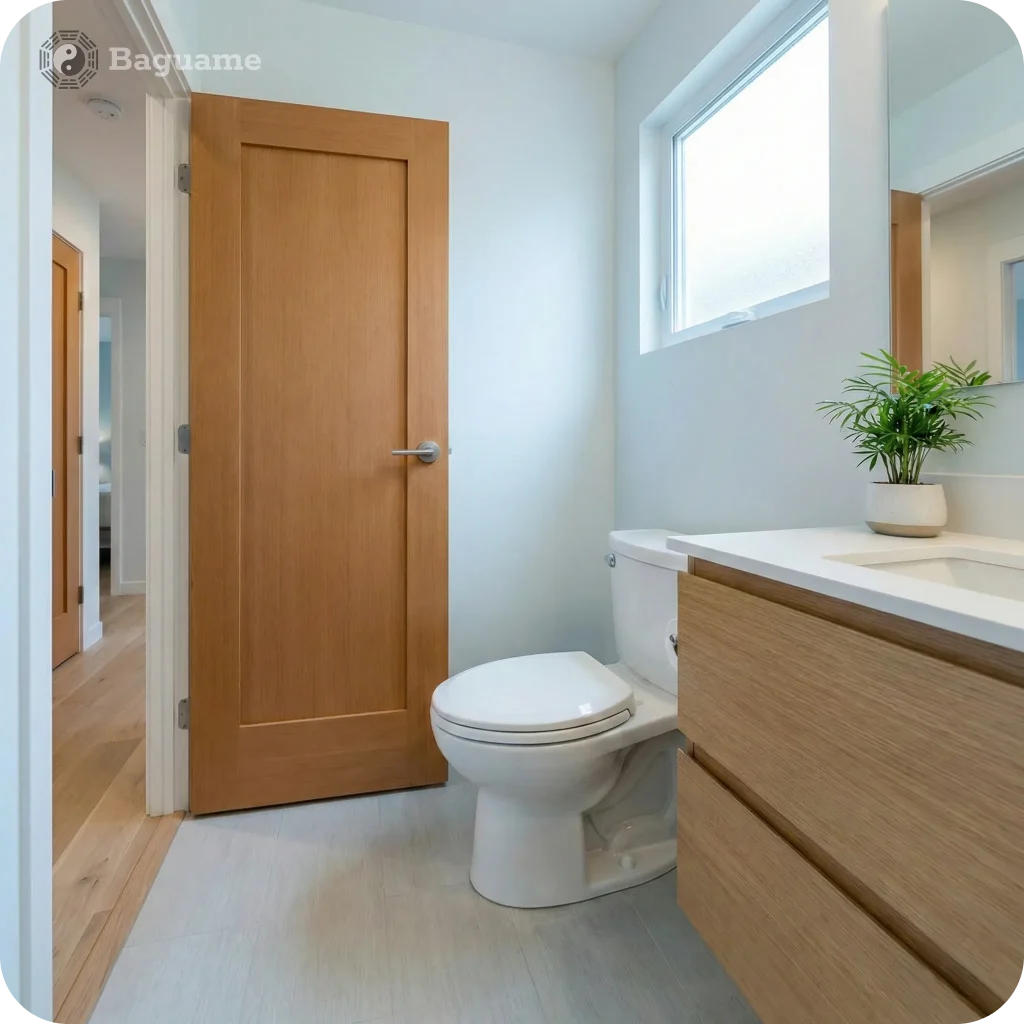
Simply put, bathrooms are places where water (and wealth) enters and leaves.
-
Keep the Lid Down: The simplest rule is to keep the toilet seat cover down and the bathroom door closed.
This prevents the draining energy from affecting the rest of the house. -
Location: Avoid houses where the bathroom is located in the exact center of the home (the Tai Chi) or visible immediately upon entering the front door.
Common Annual Afflictions: What to Watch Out For
In Classical Feng Shui, we don’t just look for “lucky” spots; instead, we must first ensure safety by avoiding “afflictions.” Every year, planetary movements shift specific energies to different compass sectors. Disturbing these sectors can trigger immediate bad luck, illness, or financial loss.
Regardless of the year, you need to know what these forces are so you can identify their location (using a compass or an online chart) and treat them with respect.
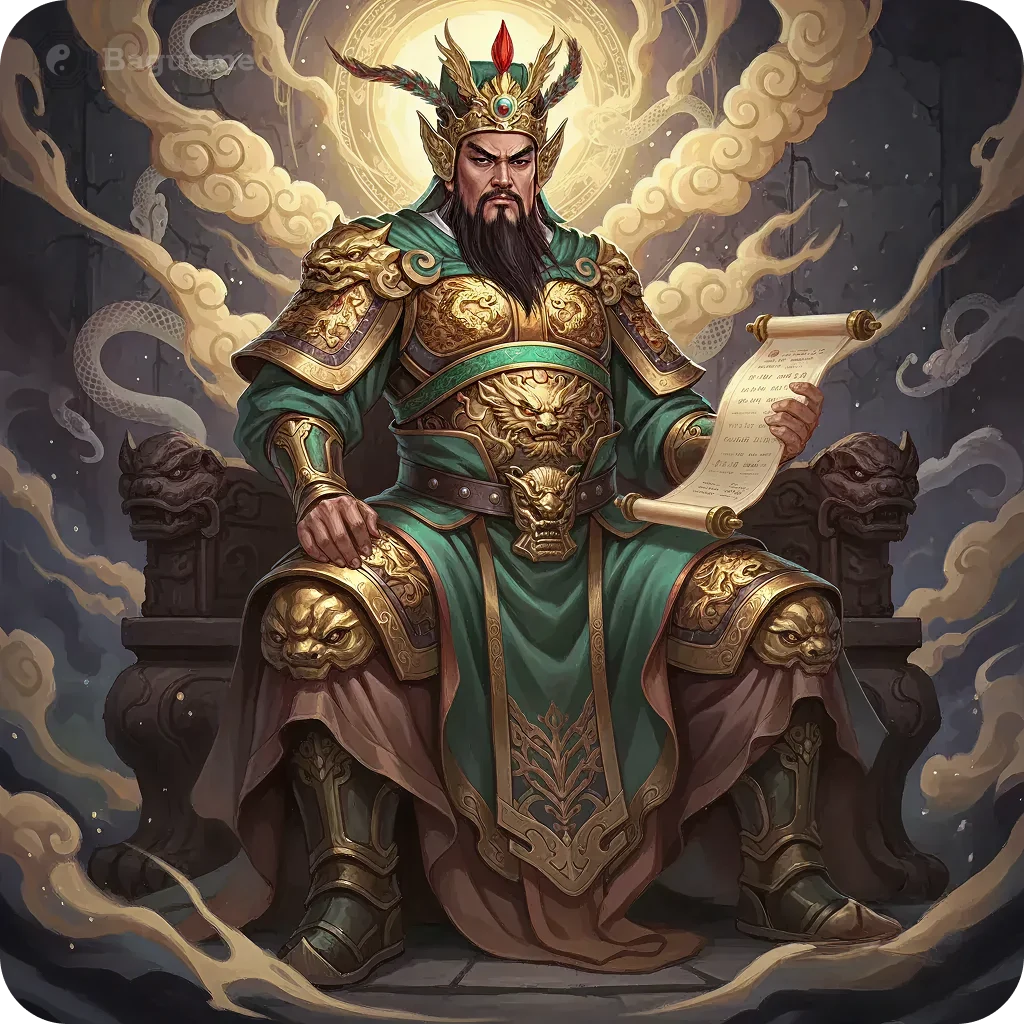
1. The Grand Duke Jupiter (Tai Sui)
Tai Sui is the governing energy of the year.
It resides in the compass sector that corresponds to the animal sign of the current year (e.g., in a Horse year, Tai Sui is in the South).
-
The Rule: Do not face the Tai Sui.
Instead, you should sit with your back to this direction to receive support. -
The Taboo: Do not renovate, dig, or drill in the Tai Sui sector.
Disturbing this earth energy can bring obstacles and conflicts.
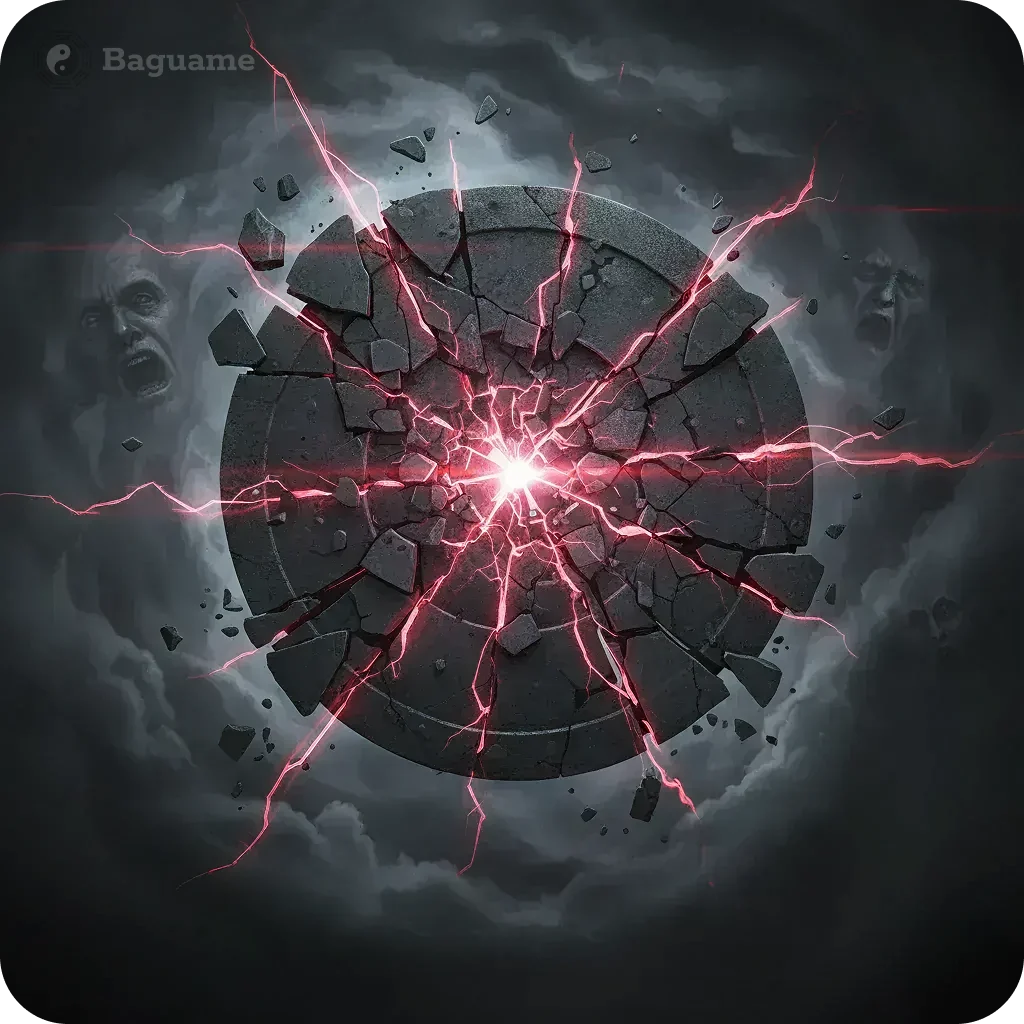
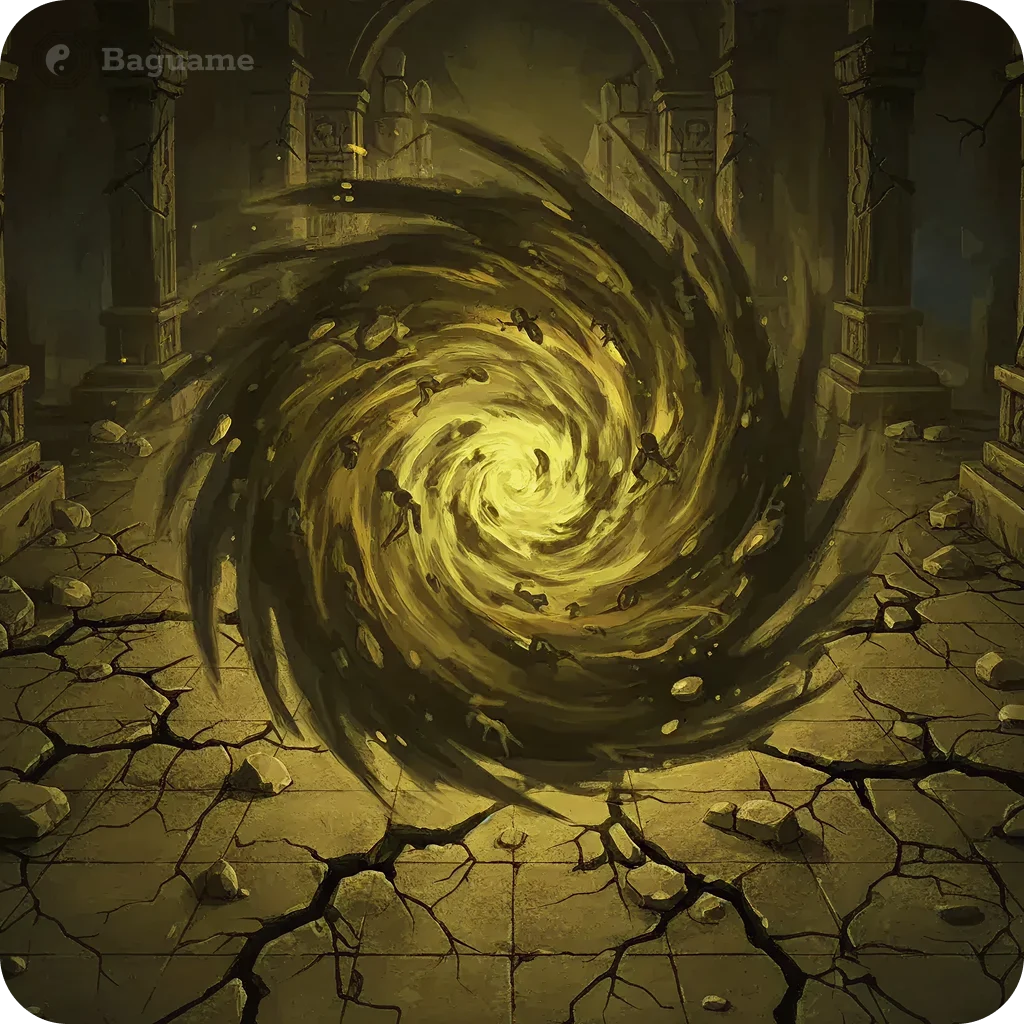
2. The Year Breaker (Sui Po)
The Sui Po is located in the compass sector directly opposite the Grand Duke Jupiter.
For example, if Tai Sui is in the South (Horse year), Sui Po will be in the North (Rat sector).
-
The Concept: This direction represents the “Clash” against the year’s ruling energy.
As such, it is highly volatile. -
The Taboo: This is the most dangerous sector for renovation.
Thus, digging ground or breaking walls here is strictly forbidden. While you can sit facing the Sui Po (which means your back is safely to the Tai Sui), you must ensure this area remains quiet and undisturbed to avoid immediate financial loss or health issues.
3. The Five Yellow (Wu Wang)
This is the most feared Star in Flying Star Feng Shui.
It is an Earth star that brings severe misfortune, accidents, and major illness.
-
The Cure: Metal weakens Earth.
Therefore, if the Five Yellow lands in your bedroom or front door, place a heavy metal object (like a 6-rod metal windchime or a brass wu lou) to exhaust its energy. -
The Taboo: Avoid bright red colors (Fire feeds Earth) and open flames (candles) in this sector for the year.
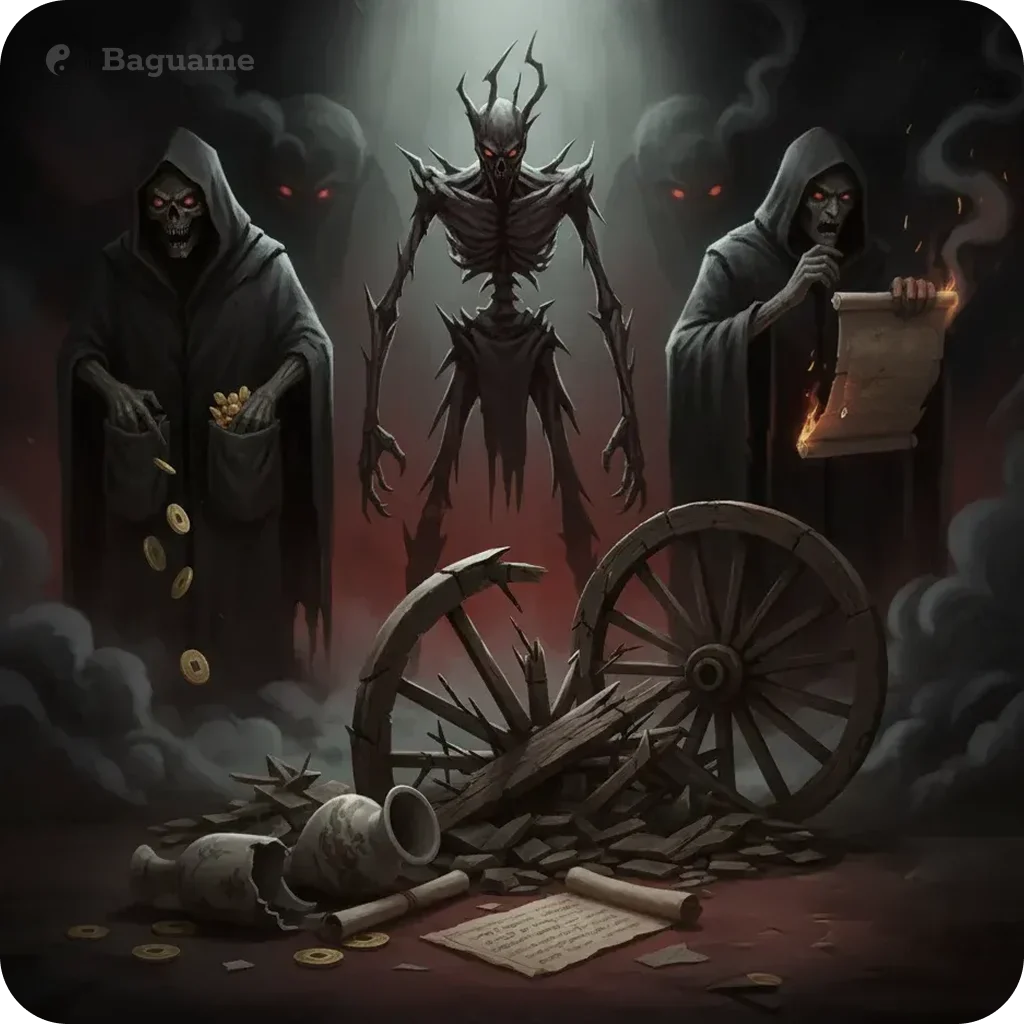
4. The Three Killings (San Sha)
This is a triangular energy formation that brings three types of bad luck: financial loss, illness, and arguments.
-
The Rule: Do not turn your back on the Three Killings.
Instead, you should face this direction to “confront” and monitor the danger. -
The Taboo: Like Tai Sui, this sector must remain quiet.
No renovation or loud music.
Busting Common Feng Shui Myths
Because Feng Shui has been popularized in the West, many misconceptions have arisen.
Unfortunately, these “New Age” tips are often based on cultural superstitions or psychology, not on energy mechanics.
Let’s separate fact from fiction.
Myth 1: “Painting your front door Red brings wealth.”
Fact: This is false.
In reality, color is elemental energy. Red represents Fire. If your front door faces a direction where the “Fire” element is needed (to support a good star), then red is great.
However, if your door faces a sector with the #5 Yellow Star or #2 Black Star (which are Earth stars), painting the door red will feed the bad earth energy and increase misfortune.
Thus, never paint a door without knowing the Flying Star chart first.
Myth 2: “The toilet flushes away your money.”
Fact: Partially true, but misunderstood.
A toilet is just a plumbing fixture. It does not magically suck money out of your bank account.
However, if a toilet is placed in your specific Wealth Sector (where the Water Star #8, #9, or #1 resides), it can “trap” that auspicious energy, preventing it from circulating in the living areas.
Conversely, if the toilet is in a bad sector, it effectively “flushes away” the bad luck, which is actually good!
Myth 3: “Ducks symbolise love, so I need Mandarin Ducks.”
Fact: This is symbolism, not energy engineering.
Placing statues of ducks, double happiness symbols, or dragons affects your psychology (Man Luck), but it does not change the geomagnetic field of the room (Earth Luck).
Instead, Classical Feng Shui focuses on placing your bed in a “Yan Nian” (Relationship) direction, rather than just decorating with symbols.
Myth 4: “My house number ends in 4, so it is unlucky.”
Fact: This is a linguistic superstition.
In Cantonese, the number “4” sounds like “death.” However, in Classical Feng Shui (He Tu numerology), the number 4 represents Wood, academic success, and romance.
In short, do not fear numbers based on how they sound; fear numbers based on the energy they carry in the Flying Star chart.
Conclusion: Bridging Ancient Wisdom and Modern Life
Feng Shui is not a quick fix or a superstition.
Rather, it is a profound study of how our environment influences our well-being.
By understanding the flow of Qi, the balance of Yin and Yang, and the cycles of Time, you stop being a victim of your surroundings and start becoming the master of them.
We have covered a lot in this guide—from the external landscape to the mathematical precision of Flying Stars.
You might feel overwhelmed by the calculations, degrees, and element cycles.
In truth, that is a normal reaction to authentic Classical Feng Shui.
Your Next Steps:
-
Start with Form: Clean your “Bright Hall” (entryway), fix your bed position, and declutter.
-
Know Your Directions: Use the Ba Zhai system to find your personal success directions.
-
Go Deeper: When you are ready to tackle the advanced “Flying Stars,” do not let the math stop you.
You don’t need to be a master with 20 years of experience to get it right.
You just need the right data. That is why we built Baguame to bridge this gap.
Our platform handles the complex algorithms, calculating the 24 Mountains, the Flying Star charts, and the Annual Afflictions instantly.
Ultimately, this allows you to focus on what matters: applying the cures and enjoying the results.